0
0

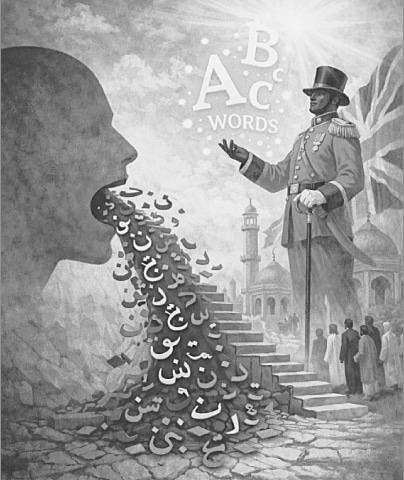
THE colonial mentality that manifests itself through language-based discrimi-nation and the creation of an artificial linguistic hierarchy is a deeply ingrained psychological and social issue in society. Pakistan is a linguistically rich nation. Urdu, Punjabi, Sindhi, Pashto, Balochi, Hindko, Siraiki and many other languages represent not only modes of communi-cation, but also collective memory, culture and identity. Yet, fluency in English is widely treated as a marker of intelligence, competence and social status, while speaking local languages is often unfairly associated with backwardness.
This mindset is a direct inheritance of the colonial rule. The British administration deliberately elevated English as the sole language of power, governance and prestige, while indigenous languages were sidelined. Unfortunately, decades after independence, this colonial culture continues to dominate our education system, bureaucracy and society at large.
Psychological studies and educational research show that learning in one’s mother tongue enhances comprehension, creativity and critical thinking. Despite this body of evidence, our systems continue to accord privilege to English in exami-nations, courts, official documentation as well as employment processes, effectively marginalising a large portion of the population.
Most developed countried have progressed academically, technologically and eco-nomically while operating primarily in their native languages. Our insistence on equating English proficiency with merit does not reflect modernity, it reflects a loss of cultural confidence.
This erosion of linguistic self-respect weakens our social cohesion and dis-connects us from our own intellectual heritage. Proficiency in English is good because it is the global lingua franca, but it should not be a measure of human worth.
True progress lies in ending this colonial mentality and restoring dignity to all local languages. Until we do so, inequality would continue, and confidence would remain tied to accent rather than ability.
Wasif Khaliq Dad
Rawalpindi
Published in Dawn, January 21st, 2026