Netanyahu urged Trump not to attack Iran: report
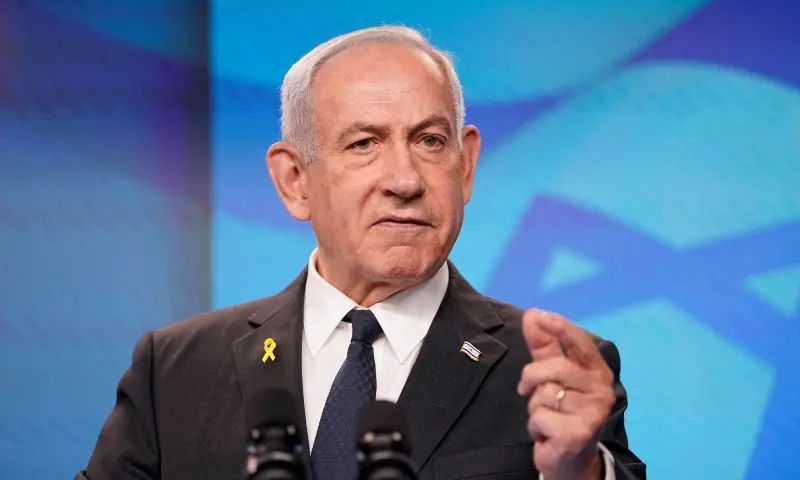


WASHINGTON: Israeli Prime Minister Benjamin Netanyahu has urged United States President Donald Trump to delay any American military strike on Iran, according to a report by The New York Times, a development that highlights growing regional unease over the risk of a wider conflict.
Netanyahu spoke to President Trump on Thursday, the same day the US president publicly suggested that Tehran had eased its internal crackdown and halted executions, citing information from “very important sources on the other side”, remarks that were widely read in Washington as a signal of hesitation about imminent military action, the report said.
The Israeli leader’s intervention comes as several key Arab partners of the US have also pressed the Trump administration to avoid an attack on Iran, warning that such a move could trigger a broader regional war, according to a senior official from a Gulf Arab country cited by the newspaper.
Officials from Qatar, Saudi Arabia, Oman and Egypt have contacted senior US officials over the past two days to convey concerns that a US strike could destabilise the region, disrupt energy flows and provoke Iranian retaliation beyond US targets, the official told NYT.
At the same time, the four Arab states have been urging Iranian officials to refrain from attacking regional countries should the United States decide to strike Iran, reflecting a coordinated effort to contain escalation on both sides, the Gulf official said.
Two diplomats based in the region also confirmed that multiple Arab governments have privately warned Washington against military action, reinforcing a rare convergence between Israeli caution and Arab anxiety over the potential consequences of open conflict with Iran, the report added.
Saudi Arabia has articulated its position publicly in measured terms, with Minister of State Adel al-Jubeir saying in Riyadh that the kingdom believes disagreements should be resolved through dialogue and negotiations rather than military confrontation.
Netanyahu also spoke with Vice President JD Vance on Tuesday, the same day senior Trump administration officials met at the White House to review military options against Iran, underscoring how diplomatic engagement and military planning have been unfolding simultaneously, US officials told the newspaper.
The White House has offered few details about the discussions, with Press Secretary Karoline Leavitt confirming that President Trump spoke with Netanyahu but declining to elaborate, while the Israeli prime minister’s office did not respond to requests for comment, according to the report.
For the Trump administration, the episode reflects a familiar tension between projecting military resolve and avoiding another open-ended conflict in the Middle East, particularly as US allies in the region signal concern about the fallout of escalation rather than confidence in its outcomes.
The alignment of Israeli and Arab appeals for restraint suggests that, despite deep divisions over Iran’s policies, regional actors see greater danger in a rushed military confrontation than in a temporary pause that keeps diplomatic channels open, the report concluded.