PTI pushes back against criticism of party leadership, policies


 2
2
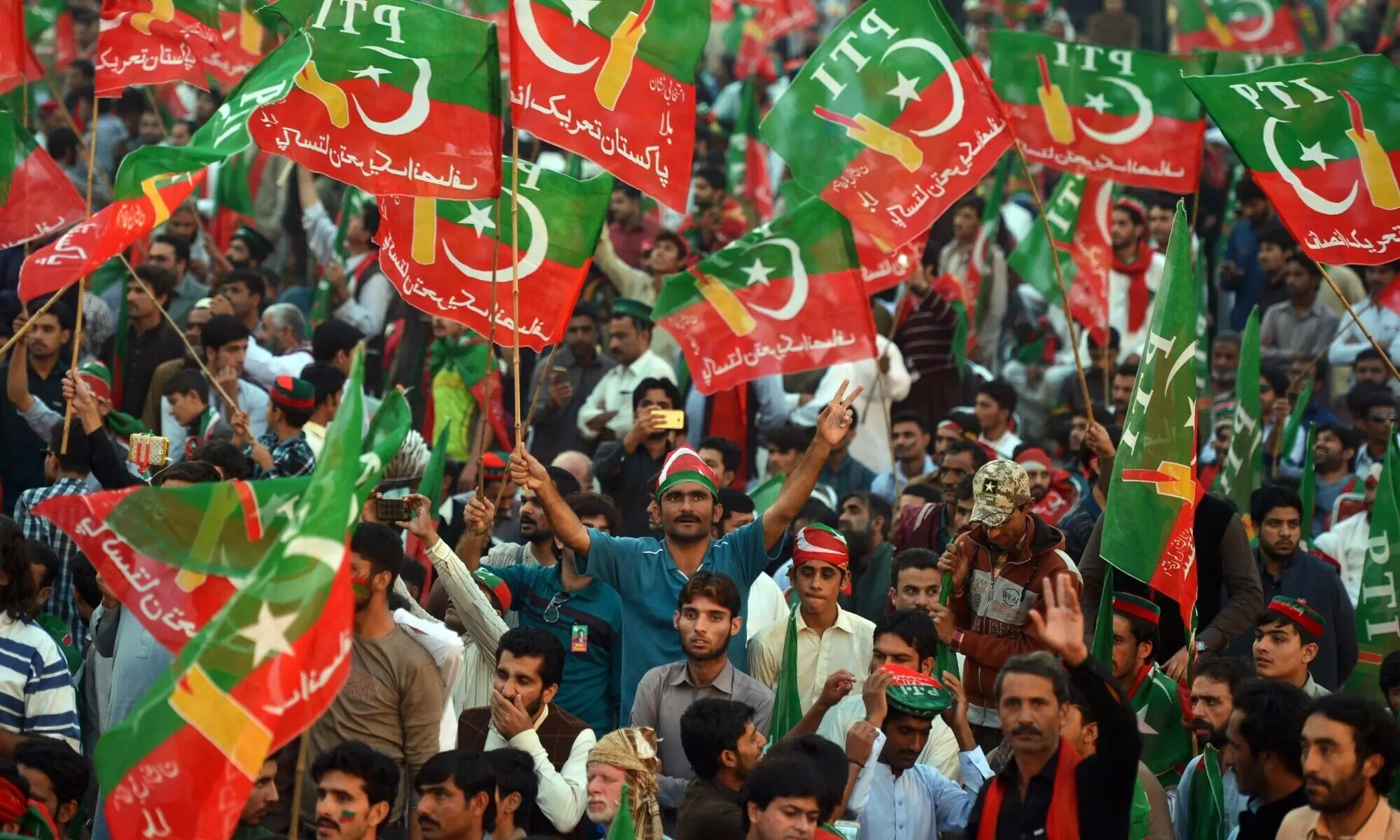

The PTI has pushed back against criticism of its party leadership and policies, terming such remarks “regrettable”.
In a statement posted on the social media platform X late on Tuesday, the party referred to the military spokesperson’s latest press conference.
It said that it was “regrettable” that the party, its leadership and an elected provincial government were subjected to such criticism.
The PTI maintained that consistent criticism “not only escalates political temperatures but also raises questions about the balance of the state apparatus”.
The party said that terming opposition to a military operation in Khyber Pakhtunkhwa, where it is in power, as support for terrorists was contrary to ground realities.
It recalled that a peace jirga was organised by the provincial government on Nov 12, 2025, where participants “unanimously resolved that a military operation is not a sustainable solution to any problem, and a comprehensive, consensus-based, and inclusive national policy is indispensable for lasting peace”.
It also took offence at the statement that terrorists do not target the PTI.
“This is completely contrary to ground realities,” it said, adding that raising such questions would only add to the grief of the martyrs, the injured and the affected families.
The party maintained that the impression the PTI was safe from terrorism reflected “a disregard for facts and is unfortunate”.
The PTI noted that several state departments in the past had issued threat alerts for party founder Imran Khan and other leaders on multiple occasions.
The party also objected to the “repeated targeting” of Imran, who it said was “not even allowed meetings and has not had an opportunity to respond to the allegations”.
“Publicly criticising a political leader who is unjustly imprisoned, who cannot exercise his fundamental right to defend himself, and whose voice is being deliberately suppressed is not appropriate in any way,” the PTI said.
It further stated that the images and speeches shown during the military spokesperson’s press briefing of “one province and one political party” were not “befitting of the country’s defence institution”.
“The PTI wants to make it clear that we are against terrorism, believe in the supremacy of the Constitution and are willing to cooperate with all state institutions within the framework of the law,” the party said.
It warned that “bringing political differences into press conferences will further stoke instability”.
“There should be no politics on serious national issues such as terrorism,” the PTI asserted, stating that “staying united was essential, rather than dividing the nation on an issue like terrorism”.
“History bears witness that despite internal political differences, the PTI has always chosen to stand with the state on matters of Pakistan’s security, sovereignty, and national interests,” it said, adding that there could be no compromise on national security.
“Whenever the country has come face-to-face with external threats or security challenges, the PTI has played a responsible role on every platform and shown cooperation with the government,“ it said.
KP CM calls for ‘policy shift’ in combating terrorism
Meanwhile, KP Chief Minister Sohail Afridi, in a statement posted on X, said that opposition to a potential military operation in the province was not limited to the PTI.
He stressed that “all political and religious parties of KP, as well as individuals from different schools of thought, were in agreement that military operations are not a long-term solution”.
“The issue is not merely that the state is not serious about combating terrorism; the problem also lies in decisions being made without taking into confidence the ground realities, elected representatives, local population, and the provincial government,“ he said.
The KP CM said that the people in his province were “dealing with insecurity, economic stagnation, fears of displacement and had developed a distrust in state policies”.
“Businesses, education, and daily routines are repeatedly disrupted, while the local population is not included in decision-making,” the KP CM said.
He went on to say that despite “22 military operations and nearly 14,000 intelligence-based operations (IBOs) conducted in KP, terrorism had not yet been eliminated”.
CM Afridi said the situation indicated “serious flaws in policymaking and its implementation”.
“In such a scenario, instead of insisting on ineffective policies from closed rooms, a clear policy shift has become inevitable, because the nation’s resources are being squandered endlessly on these failed strategies, and the protection of people’s lives and property remains continuously at risk,” he said.
He questioned whether any “concrete guarantees” existed that would ensure that a military operation would result in long-term peace.
“If past strategies, despite loss of life and the use of immense resources, failed to deliver the desired results, how are the people and their elected representatives being assured that the same approach will produce different outcomes this time?” CM Afridi asked.
“Without transparency in policymaking, clear objectives, and measurable results, any new initiative risks adding to uncertainty rather than peace,” he added.
He maintained that “a negative mindset from the representative of a state institution will damage national unity and also stoke instability”.
“It is also a bitter reality that, despite repeated warnings, terrorism was allowed to re-enter KP, and its spread was fueled through self-serving narratives,“ he said.
The KP CM said that the PTI had also “paid a toll in this war”.
“Party officials, elected representatives, and ministers have been targeted by terrorists; some were martyred by bullets, while others were martyred in blasts,” he said.
He stressed that instead of press conferences and unilateral decisions, implementation of the KP Assembly’s declaration following the national jirga should be allowed.
“It is also essential that future decisions be made, not in closed rooms or based on the whims of individuals, but under policies formulated by all stakeholders and the elected representatives of the people,” Afridi added.
The statements from the PTI and the KP chief minister come after Inter-Services Public Relations (ISPR) chief Lt Gen Ahmed Sharif Chaudhry, in a wide-ranging and marathon press conference, accused the political party in power in Pakistan in 2021 — ostensibly referring to the PTI — of “internally facilitating terrorists” and deciding to hold talks with them while a “great game was being played in Afghanistan”.