ISLAMABAD: National Assembly Speaker Sardar Ayaz Sadiq on Monday said that the process for appointment of the opposition leader will be initiated afresh.
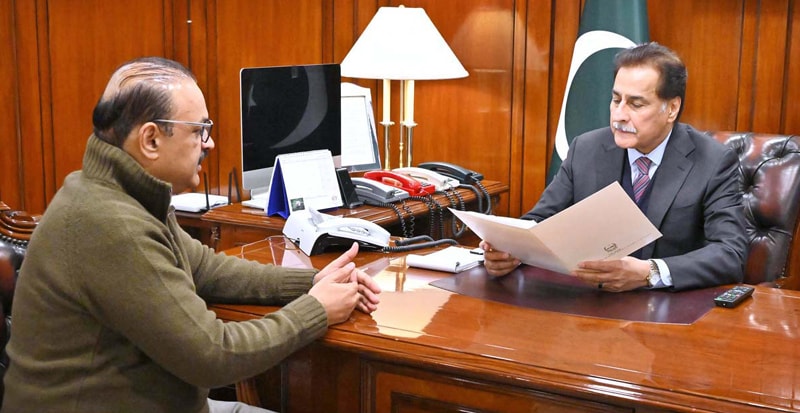
During a meeting with PTI Chief Whip Amir Dogar, who called on him to discuss the unusual delay in the opposition leader’s appointment, Mr Sadiq said that the rules on the matter were clear.
During the meeting, Mr Dogar presented documents confirming withdrawal of cases involving to former Opposition Leader Omar Ayub from the courts.
He also reiterated demand for Mehmood Achakzai to be appointed as the Opposition Leader. In response, Speaker Sardar Ayaz Sadiq emphasised that all proceedings will be conducted strictly in accordance with rules, laws, and the Constitution. He said he would inform the House about this matter in the upcoming session of the National Assembly.
Amir Dogar presents documents to speaker confirming withdrawal of cases involving Omar Ayub
The development comes around a month after the NA Secretariat sent a letter to Mr Dogar, seeking details about the status of cases concerning Mr Ayub. The letter said the provision of details in writing was necessary for completing the process for appointing an opposition leader in the lower house of parliament. The post of the opposition leader in the NA has been vacant since the disqualification of Mr Ayub by the Election Commission of Pakistan (ECP) in August last year following his conviction for alleged role in May 9 violent protests.
The same month, incarcerated PTI founder Imran Khan had nominated Mr Achakzai for the post of opposition leader and despite the PTI’s insistence for his appointment, his notification remains pending. Mr Ayub had challenged his disqualification in the Supreme Court (SC), but withdrew his plea in October last year and the election on the seat that fell vacant due to his disqualification was also held and won by PML-N candidate. For his part, Mr Sadiq had maintained that the matter related to appointment of a new opposition leader was “sub judice” — apparently a reference to Mr Ayub’s appeal against his disqualification.
In its letter to Mr Dogar last month, the NA Secretariat stated that the opposition had mentioned in parliament that Mr Ayub’s cases were not sub judice. “However, this fact was not conveyed to the secretariat in writing,” the letter said, requesting that the current status of the cases in which the secretariat had been made a party be communicated to it in writing for completion of the “prescribed process of the declaration of leader of the opposition in the National Assembly”.
Talking to reporters after his meeting with Mr Dogar, the NA Speaker confirmed the receipt of documents sought by him. Mr Sadiq said that four letters had been sent to the opposition’s chief whip in this regard. He said that after the fourth letter, the opposition had submitted a certified copy of the decision.
“The constitutional process for the appointment of the next opposition leader will be initiated in the next parliamentary session,” Mr Sadiq said. He said the process will move forward “after checking and verification of the signatures of the opposition members”. He also said that the opposition had not yet made formal contact for initiating talks with the government.
“My role in the talks is only that of a facilitator,” he said. He further said that the committee system in the lower house of parliament was fully functional as per constitutional requirements, adding that he was “completely independent” in his position.
Last month, Prime Minister Shehbaz Sharif had reiterated his offer for talks with the opposition but also emphasised the dialogue between the two sides could only proceed on “legitimate matters”.
Subsequently, at a recent national conference organised by the Tehreek Tahafuz Ayeen-i-Pakistan opposition alliance, participants had agreed that the door for dialogue must never be closed in a democracy. The same day, political leaders from across the spectrum, including leaders from the ruling PML-N, called for dialogue and restraint to achieve stability in the country, saying that political confrontation was causing instability and violence.
Published in Dawn, January 6th, 2026