0
0

TEHRAN/WASHINGTON: As Iran deliberated on a US proposal to end hostilities in the Middle East, the world anxiously awaited its response that would stop the fighting and open up the Strait of Hormuz, a vital energy route that accounts for 20 per cent of the global oil trade.
Iran’s foreign ministry spokesperson said Tehran had not yet reached a conclusion on the emerging plan, which Reuters said centred on a short-term memorandum rather than a comprehensive peace deal, underscoring deep divisions between the two sides.
The spokesperson said once a decision was made, it would be conveyed to the Pakistani mediators, and based on the results of this exchange of messages, the next steps would be determined.
Hopes that even a partial deal could lead to the reopening of the Strait of Hormuz already moved markets, with oil prices sliding again on bets that supply disruptions could ease and global stocks largely holding onto record highs.
Tehran and Washington scaled back ambitions for a sweeping settlement as differences persist, particularly over Iran’s nuclear programme, including the fate of its highly enriched uranium stockpiles and how long Tehran would halt nuclear work.
Instead, they were working toward a temporary arrangement set out in a one-page memo aimed at preventing a return to conflict and stabilising shipping through the strait, the sources and officials quoted by Reuters said.
“Our priority is that they announce a permanent end to war and the rest of the issues could be thrashed out once they get back to direct talks,” a senior Pakistani official involved in mediation between the two sides told Reuters.
The proposed framework would unfold in three stages: formally ending the war, resolving the crisis in the Strait of Hormuz and launching a 30-day window for negotiations on a broader agreement, according to the sources and officials.
Amid talks of a deal, Iranian President Pezeshkian and Supreme Leader Khamenei also held a meeting that lasted for nearly two-and-a-half hours. He described the meeting with the supreme leader as one “based on trust, calm, empathy, and direct dialogue”.
Meanwhile, Qatari Prime Minister Sheikh Mohammed bin Abdulrahman bin Jassim Al Thani expressed optimism that the US and Israel will “put an end” to the Middle East crisis. Any US-Iran agreement must take into account the interests of the countries of the region, said Sheikh Mohammed.
Unresolved key demands
The proposal would formally end the conflict in which full-scale warfare was paused after a ceasefire was announced on April 7.
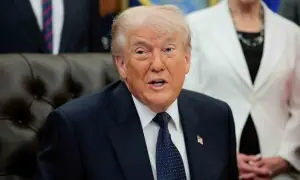
The source briefed on the mediation said the US negotiations were being led by Trump’s envoy Steve Witkoff and son-in-law Jared Kushner. If both sides agreed on the preliminary deal, that would start the clock on 30 days of detailed negotiations to reach a full agreement.
In a sign of the US keeping up pressure, it imposed sanctions on Thursday on Iraq’s deputy oil minister and three militia leaders over what it alleged was their support for Iran.
The sources said the memorandum did not mention several key demands Washington has made in the past, which Iran has rejected, such as limits on Iran’s missile programme and an end to its support for proxies in the Middle East, including Hezbollah.
Explosions on island
Iranian state TV reported explosions on an island in the Strait of Hormuz on Thursday, saying they occurred during an “exchange of fire”.
“The explosions at the Bahman pier on Qeshm Island occurred during an exchange of fire between Iranian armed forces and the enemy,” the broadcaster IRIB reported.
Other Iranian news outlets also reported the blasts, while the Israeli military said it was “not aware of such” a strike.
Published in Dawn, May 8th, 2026