KP govt opposed to military operations, says Afridi
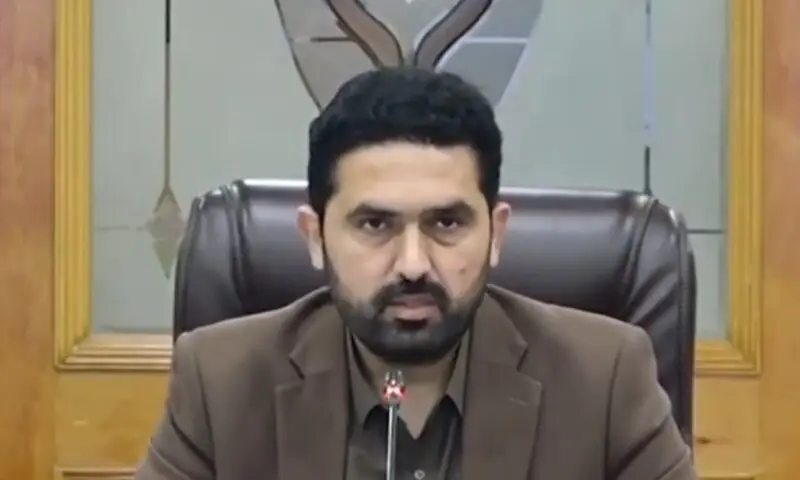


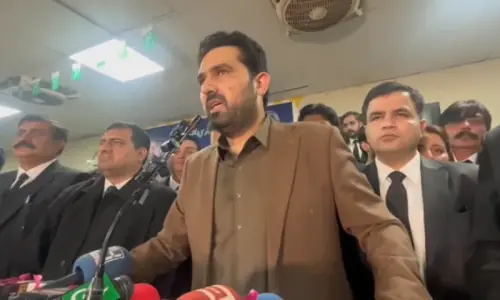
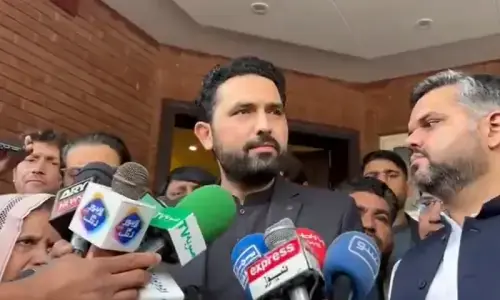
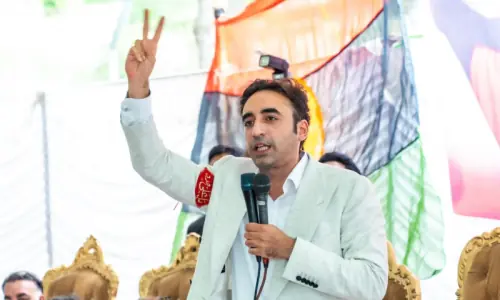
PESHAWAR: Khyber Pakhtunkhwa Chief Minister Sohail Afridi on Monday reiterated opposition to military operations in the province and said if the decisions were taken behind closed doors and imposed on the province, it would create serious concerns among all stakeholders.
In November last year, a “grand peace jirga”, called by the KP government to discuss the law and order situation in the province, issued a 15-point joint declaration to overcome the challenge.
The jirga, which was held at the KP Assembly, unanimously declared that a military operation was not a solution to any problem, according to an official statement issued after the cabinet meeting.
The chief minister said that the provincial government held the “same clear and unequivocal stance” and that under the leadership of PTI founder Imran Khan, it declared that issues should be resolved through political, social and consultative processes rather than the use of force.
He said that all participants of the peace jirga also agreed on that point.
“If, despite this unanimous stand, decisions are taken behind closed doors and attempts are made to impose those decisions on the province, it will create serious concern among all stakeholders. No single individual or institution can forcibly impose decisions on the province, and that the consequences of such actions will not be what the decision-makers desire.”
Mr Afridi said that peace was not only a requirement of Khyber Pakhtunkhwa but a shared necessity for the entire Pakistan.
He, however, said sustainable and lasting peace required a comprehensive, inclusive and collective policy.
“Such a policy must include all institutions, political and religious parties, tribal and Pashtun elders, and community leaders so that an effective and acceptable course of action can be developed through mutual consultation.”
The chief minister said that when all stakeholders sat together, not only would an effective policy be formulated, but peace would also be restored.
He said in contrast, decisions made behind closed doors could neither establish peace nor restore public trust.
The chief minister said that the Khyber Pakhtunkhwa government was opposed to any military operation and would not allow it under any circumstances.
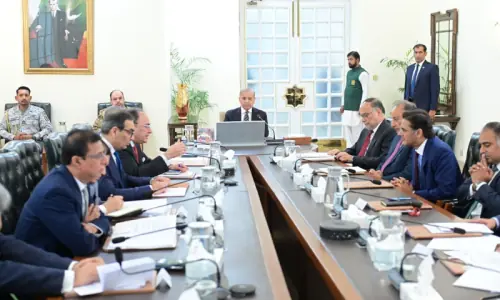
The meeting also approved several key decisions related to governance reforms, social welfare, health, education, youth development, and overseas Pakistanis.
The cabinet approved the Khyber Pakhtunkhwa Establishment of Special Courts (Overseas Pakistanis Properties) Act, 2025.
The chief minister said overseas Pakistanis play a vital role in the country’s economic development, and protecting their rights and properties is a key responsibility of the provincial government.
He said the establishment of special courts would help ensure swift resolution of property-related disputes involving overseas Pakistanis.
The cabinet also decided to refer the agenda for a police-style “Shuhada Package” for the staff of the excise, taxation and narcotics control department to a cabinet committee. It ordered the formulation of a comprehensive uniform policy to include martyrs from other uniformed forces in the province.
Besides, approval was also granted for the purchase of buses for the Special Education Complex Hayatabad, while directions were issued to arrange transport facilities for children under the care of the Zamung Kor initiative.
In view of the harsh winter season, the social welfare department was directed to take special measures for homeless people, and authorities were instructed to ensure adequate arrangements for tourists in winter tourist destinations.
The cabinet approved the release of Rs900 million to the irrigation department for desilting campaign and said that the desilting campaign should be carried out in a transparent and organised manner. It added that the initiative would also help reduce potential flood damage.
Further precautionary measures were ordered in light of weather forecasts issued by the Meteorological Department.
For youth engagement, the cabinet approved Rs6 million for the organisation of the Grand Kurram Youth Convention.
It emphasised that providing youth with platforms for dialogue and debate on national and provincial issues is the need of the hour and contributes to national cohesion.
The cabinet also directed that similar youth conventions be organised in other districts.
The meeting approved the procurement of vehicles for National Parks and Wildlife projects, forest staff in merged districts, and the Office of the Provincial Ombudsperson. The cabinet directed all departments to submit details of government vehicles within one week, along with annual expenditures incurred on their maintenance.
The cabinet approved bringing the Cadet College Lakki Marwat under the Khyber Pakhtunkhwa Educational and Training Institutions Ordinance, 1971, and endorsed the 4-tier formula for the upgradation of Librarians in the Colleges of Higher Education Department.
In the health sector, the cabinet sanctioned Rs448 million for the Structural Heart and Cardiac Transplant Programme, approved funds for the replacement of hemodialysis machines in government hospitals, allowed the continuation of services of head nurses and clinical/senior clinical technicians in MTI hospitals, and financial assistances for treatment were approved for two residents.
Published in Dawn, January 6th, 2026