Manifesto to focus on economic relief, governance reforms in Azad Kashmir: PML-N member

MUZAFFARABAD: The Pakistan Muslim League-Nawaz (PML-N) plans to place economic relief for the working and lower-middle classes, youth empowerment and institutional reforms at the core of its election manifesto for Azad Jammu and Kashmir (AJK), which is expected to be unveiled ahead of the forthcoming general elections.
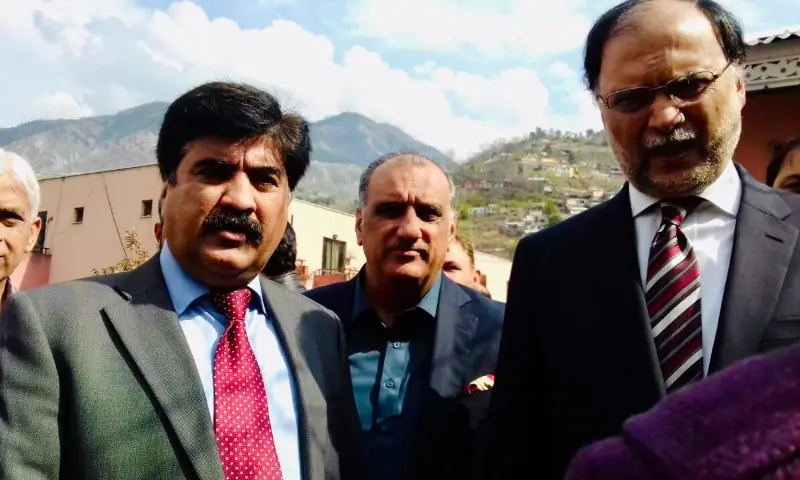
The outlines of the proposed manifesto were shared by Shahid Mahmood Wani, a senior PML-N leader and member of the party’s manifesto committee, in an informal conversation with journalists here on Saturday. The document, he said, was being framed in line with the vision of party supremo Nawaz Sharif, with an emphasis on confidence-building amid prevailing political uncertainty and tension in the region.
Mr Wani said the manifesto would focus on economic stabilisation and infrastructure development, including encouragement of local and mega hydropower projects to reduce electricity costs and make AJK a load-shedding-free zone. He said the party would also prioritise the timely completion of such projects to ensure affordability and sustainability.
Referring to the communications sector, he said the Mansehra–Muzaffarabad–Mirpur Expressway, envisioned during Nawaz Sharif’s earlier tenure, would remain among the party’s key commitments. He added that tourism would be treated as a local industry, with emphasis on upgrading inter-district and inter-provincial road networks and constructing some unavoidable tunnels according to international standards.
Mr Wani said the manifesto also proposed using Muzaffarabad and Rawalakot airports for tourism-related operations and launching chairlift projects at Pir Chinasi and Toli Pir to enhance visitor access and economic activity. He added that transparency in the housing sector and regulation of housing societies would also form part of the party’s economic agenda.
On social development, Mr Wani said the PML-N intended to accord priority to youth and women, who together constituted a major segment of the population. He said women’s participation in governance and their social and economic empowerment would be encouraged, while legislation would be proposed to discourage early-age marriages.
For youth development, he said the party planned to introduce a ‘Laptop for All’ programme to support intellectual growth and economic opportunity. He added that vocational education and human resource development would receive special attention, with arrangements for training certified medical and technical professionals for employment in Gulf and European countries.
In the education sector, Mr Wani said the manifesto envisaged declaring an education emergency, revamping public schools, making IT laboratories functional, regulating private schools and establishing modern institutions for special children in all three divisions. He said toilets and basic facilities in schools would also be upgraded to ensure a conducive learning environment.
On healthcare, he said the party proposed the construction of major hospitals and trauma centres in all three divisions, along with the revival and improvement of the health card scheme introduced during Nawaz Sharif’s tenure. He added that clean drinking water would be treated as a priority and helicopter-based air ambulance services would be introduced to improve emergency response.
Mr Wani said the manifesto would also place strong emphasis on governance and institutional reforms, including improving the justice system, ensuring affordable and speedy justice, reforming policing and police station culture, abolishing VIP privileges and strengthening the local government system. He said a functional public service commission and merit-based recruitment through third-party testing would be key governance measures.
He added that the party intended to draw on initiatives undertaken by Punjab Chief Minister Maryam Nawaz in public service delivery and social welfare, and adapt similar models to local conditions in AJK.
According to Mr Wani, climate change adaptation, forest conservation, population planning, improved zakat management, activation of price control committees and engagement with lawyers’ bodies would also form part of the manifesto, along with special focus on information technology and digital connectivity in line with Nawaz Sharif’s vision.
Published in Dawn, January 4th, 2026