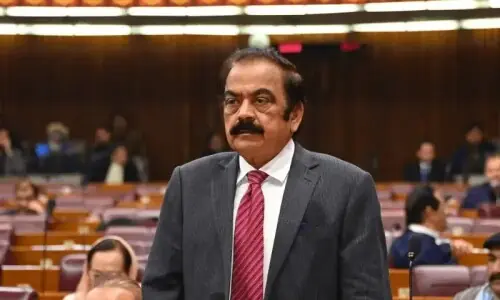
THE Prime Minister’s Adviser on Political Affairs, Rana Sanaullah, was not far off the mark during a TV interview on Thursday when he suggested that five actors could resolve Pakistan’s long-running political crisis if they were to find common ground.
Mr Sanaullah also advised that some confidence-building measures be taken to make this possible, such as the opposition PTI distancing itself from social media campaigns and accounts that denigrate the armed forces and their leadership.
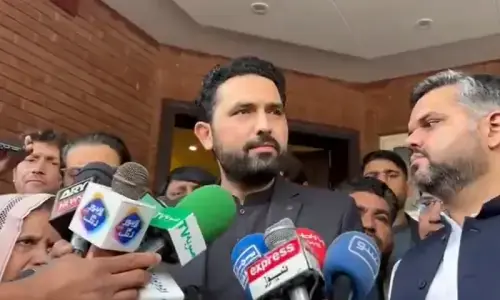
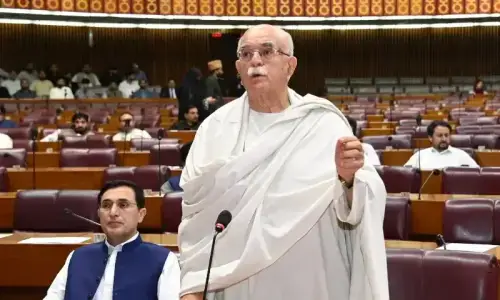
This should be welcomed as a positive signal, as should the counter-proposal from the PTI’s chief whip in the National Assembly, Malik Amir Dogar. Mr Dogar, apparently reacting to Mr Sanaullah’s statement, proposed that the government arrange a meeting between PkMAP chief Mahmood Khan Achakzai, MWM chief Allama Raja Nasir Abbas, and incarcerated PTI leader Imran Khan. “Hopefully, a path will be made,” Mr Dogar said. Unlike the rigid preconditions set in the past, these proposals sound more realistic.
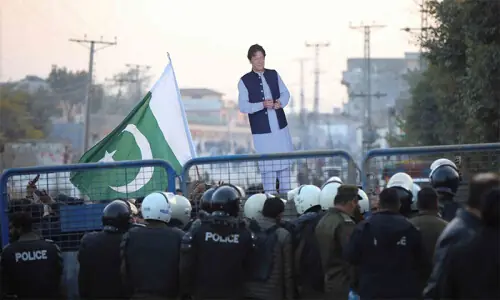
Both sides should see what the other is willing to concede in its requirements for dialogue. The PTI has fought a long, damaging narrative war against those it blames for its difficulties. All it is being asked to do now is not aggravate the hostilities it has nurtured and allow for a reduction in tensions. Given that the opposing politicians still have the means to inflict more pain on the party, its leadership and its rank and file, the PTI should see this as a reasonable ask, especially if the possibility of a return to normality is attached to it.
On the other side, the government should recognise that the PTI is not asking for much. It has merely asked that two senior politicians who have already signalled their readiness for dialogue be allowed to meet Mr Khan, as they would likely attempt to reason with him.
The stakeholders should appreciate that, after a very long time, there is a possible path forward for both the government and the opposition. They must attempt to resolve their differences through negotiation. There is no question that any dialogue, if it materialises, will prove to be a difficult reckoning for each of the stakeholders involved, as mistakes aplenty have been made.
Still, it is important that a serious and committed effort, by politicians on both sides, is made. Pakistan is at a crossroads. Unless a political détente is reached, there is a significant risk that it may slip into a downward spiral that could culminate in anarchy and economic misery for its millions of inhabitants.
Mere stability is not good enough for a country of this size and potential. People have a right to prosper and live in contentment in the land they call home. The country’s leadership should consider the welfare of its people. Everything else is irrelevant.
Published in Dawn, January 3rd, 2026