PHC sets aside order to appoint arbitrator over UET monetary dispute
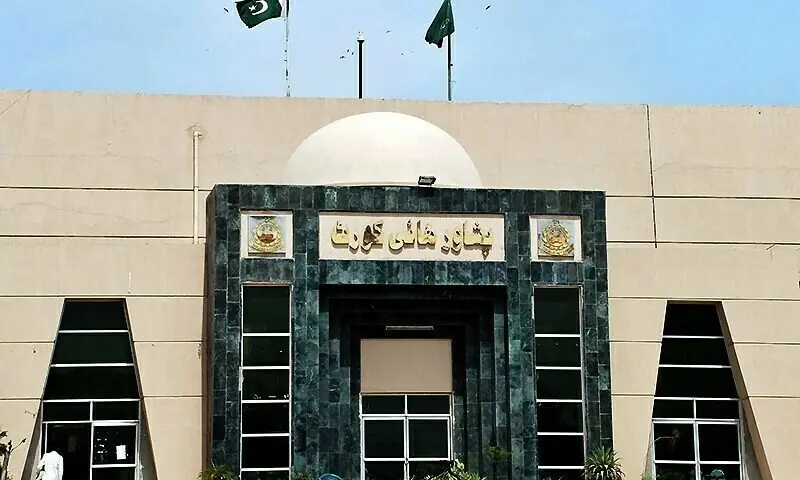
PESHAWAR: Accepting a plea of the University of Engineering and Technology (UET) Peshawar, the Peshawar High Court has set aside a subordinate court’s orders to appoint a sole arbitrator without consent of the university for its monetary dispute with a leading construction company.
Disposing of the UET’s appeal, Justice Dr Khurshid Iqbal of a single-member bench declared illegal the May 6, 2025, and Nov 14, 2025, orders of an additional district judge (trial court) to first appoint an arbitrator and later turn down the university’s application for appointing a second arbitrator of its choice.
The bench directed the trial court to provide a full and fair opportunity to the relevant parties to place on record their respective contentions regarding the appointment of arbitrators, strictly in accordance with the arbitration clause (Clause 67.3) of their contract.
It also ordered compliance of the appointment process with the statutory mandate under Section 20(4) of the Arbitration Act, 1940.
Directs trial court to record arguments of relevant parties
The respondent named in the appeal, Hidayatullah Construction Company, initially instituted a petition under Section 20 of the Arbitration Act before the district judge of Peshawar, seeking a direction to the appellant (UET) to produce the original arbitration agreement and to refer the dispute between the parties to arbitration.
It asserted that despite completion of the assigned work, a dispute had arisen concerning outstanding payments and final price adjustments to the tune of around Rs445 million.
The UET contested the petition contending that the respondent had completed the project on its Jalozai Campus in 42 months instead of the stipulated period of 18 months.
On May 6, 2025, the additional district judge (ADJ) decided the preliminary issue of maintainability of the petition and ruled that prima facie dispute between the parties warranted reference of the matter to arbitration. Consequently, Dr Shahid Mahmood was appointed the sole arbitrator with direction to proceed in accordance with law and submit the award within the statutory period.
Subsequently, the appellant moved an application on June 25 seeking appointment of a second arbitrator, Advocate Afzal Hussain, on the ground that appointment of a sole arbitrator without its consent was contrary to the mandatory provisions of the Arbitration Act.
The trial court, however, rejected the said application on Nov 14, 2025, holding that the earlier order of May 6 had attained finality and that the reference to a sole arbitrator was in consonance with the arbitration clause and the discretion vested in the court under Section 20 of the Act.
Advocate Asadullah Khan Yousafzai appeared for the UET and contended that Section 20(4) of the Arbitration Act clearly provided that the arbitrator had to be appointed by the parties, or where the parties couldn’t agree upon an arbitrator, he had to be appointed by the court.
He argued that the trial court couldn’t directly appoint an arbitrator without first affording the parties an opportunity to act in accordance with their contractual stipulation.
After detailed discussion on different provisions of the Arbitration Act, the contract between the parties and the Rules of Conciliation and Arbitration of the International Chamber of Commerce (ICC), the bench ruled that under the ICC rules, the appointment of arbitrator(s) was not left to unilateral discretion, whether of one party or of the court, but followed a structured process ensuring neutrality, equality of participation, and procedural fairness.
“By appointing a sole arbitrator in disregard of the agreed mechanism and without first determining whether the parties could agree upon appointment in accordance with Clause 67.3 and the ICC Rules, the learned Trial Court effectively supplanted the contractual regime with its own discretion, which is not sanctioned by Section 20(4) of the Act,” it declared.
Published in Dawn, January 2nd, 2026