Punjab Assembly broaches federal ‘overreach’ in provincial executive
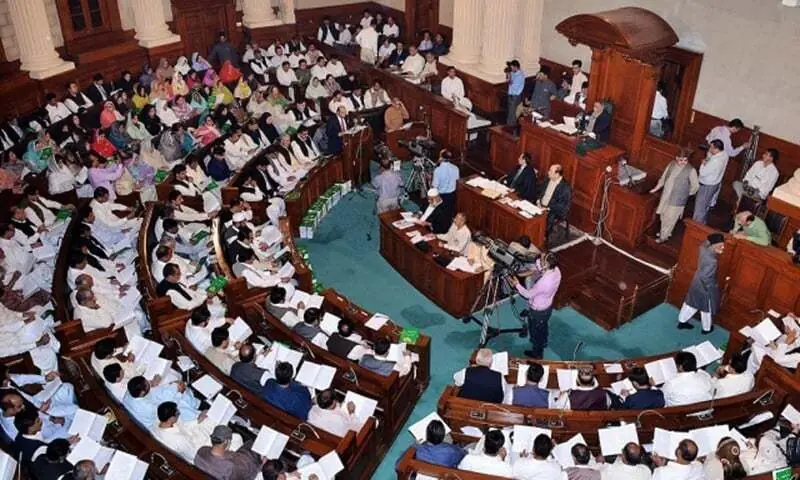
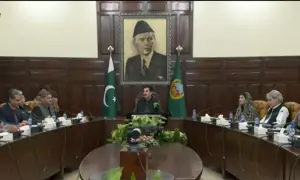
LAHORE: In an important institutional step, the Punjab Assembly on Wednesday took up its first formal debate on ‘federal encroachment’ on provincial executive authority, marking a significant moment in Pakistan’s constitutional and governance discourse.
The discussion ensued an adjournment motion jointly moved by Ahmad Iqbal Chaudhary, Amjad Ali Javed, Zulfiqar Ali Shah, Shaukat Raja, Ahmad Khan Leghari, Iftikhar Hussain Chachar and seven other MPAs, reflecting consensus on the urgency and gravity of the issue.
The motion questioned the long-standing practice of appointing federally controlled officers to key provincial posts, arguing that such arrangements are inconsistent with the spirit of the 18th Constitutional Amendment and undermine the concept of a federal constitutional order.
While allowing discussion on the motion, Speaker Malik Muhammad Ahmad Khan observed that the matter was of great constitutional importance, and welcomed the fact that the provincial legislature was finally engaging with core questions of federalism, governance, and executive authority that have remained unresolved for decades.
Motion questions practice of appointing federally-controlled officers to key provincial posts; House forges ‘rare’ consensus on provincial control over bureaucracy
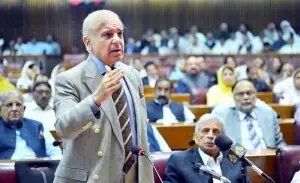
Presenting the motion, MPA Chaudhary emphasised that true administrative federalism requires provinces to exercise effective control over their own administrative cadres. He stated that while provinces are held accountable for governance outcomes, they continue to lack decisive authority over postings, transfers, and disciplinary control of officers implementing provincial policy.
He noted that the purpose of initiating this debate was not confrontation, but reform.
He remarked that unless Pakistan addresses the persistence of a centralised, colonial-era governance model, meaningful improvements in service delivery and accountability will remain elusive. “This debate is necessary if we are serious about reforming a rotten governance system and aligning it with constitutional spirit,” he said.
Members from both treasury and opposition benches invoked the Objectives Resolution, the Preamble of the Constitution, and Articles 99(3) and 133(3) to argue that executive authority must rest with the elected provincial government, and that administrative arrangements must flow from constitutional principles rather than legacy practices.
Several members also highlighted that the Punjab Government Rules of Business, 2011, were found to be misaligned with the spirit of the Constitution, particularly in relation to executive authority and administrative accountability, further complicating effective provincial governance.
The opposition benches fully supported the motion, underscoring that administrative federalism is not a partisan issue but a constitutional imperative central to democratic governance, provincial autonomy, and institutional efficiency.
PTI’s Ijaz Shafi remarked that “we are in complete support of this and administrative autonomy at the provincial level will lead to the rule of law in the country.”
Given the depth of interest and seriousness of the matter, the speaker directed the government to furnish a formal response and fixed the issue for further discussion in the next assembly session.
Tariq Malik, former president of the Pakistan Administrative Service, asserts that after the 1973 Constitution, not a single federal servant could be lawfully appointed in any province. Referring to the reply submitted by the Services & General Administration Department (S&GAD) to the Punjab Assembly in response to the adjournment motion, he said both the Civil Service of Pakistan Rules, 1954, and the so-called post-sharing formula devised between PAS and PMS by Moeen Qureshi’s caretaker government in 1993 were in violation of the constitution.
According to him, only the provincial house had the authority to appoint and regulate civil servants in a province squarely rests with provincial assemblies under Articles 240(b) and 242 of the Constitution, making any federal role in postings - from chief secretary to assistant commissioner - constitutionally untenable. In Punjab, this requirement has already been fulfilled through the Punjab Civil Servants Act, 1974, rendering old federal administrative frameworks irrelevant.
He termed the continued involvement of the federal Establishment Division in provincial appointments, cadre control and service management as a constitutional overreach, violating the principles of division of powers and multiple constitutional provisions.
A sharp distinction has also been drawn between the Provincial Management Service (PMS), established under provincial law, and the Pakistan Administrative Service (PAS), which is based on a pre-constitutional administrative framework. The posting of PAS officers on provincial posts amounts to encroachment on provincial autonomy.
He also draws attention to Article 242, which assigns recruitment for federal services to the Federal Public Service Commission (FPSC) and for provincial services to provincial public service commissions. “Legal analysts question how provincial posts are being filled through the CSS examination conducted by the FPSC, calling it a clear constitutional violation.”
Published in Dawn, January 1st, 2026