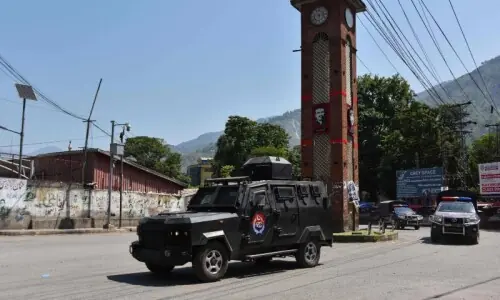
DATA released by an Islamabad-based think tank confirms that 2025 was a lethal year where terrorism-related fatalities are concerned. In fact, the statistics compiled by the Pakistan Institute for Conflict and Security Studies say that the outgoing year saw the highest level of terrorism-related violence in over a decade, with a 73pc increase compared to 2024.
Other studies have also confirmed these trends. The vast majority of deaths (at least 3,387) are those of terrorists (2,115). However, what is concerning is the high fatality rate of security personnel and civilians in 2025; at least 664 security men were martyred in the outgoing year, along with 580 civilians. Also, in keeping with recent trends, most violent incidents occurred in KP and Balochistan. Furthermore, there was a rise in the number of suicide bombings in the outgoing year.
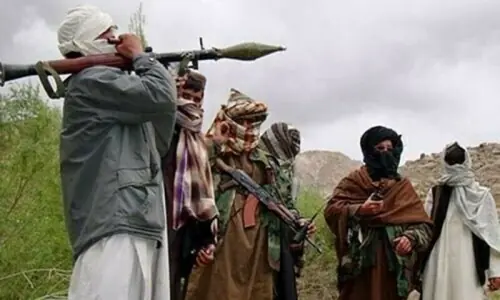
Much of this violence can be traced to the TTP-led insurgency in KP, as well as Baloch separatist attacks. However, the state — both its civilian and military arms — will need to refine their counterterrorism strategies to bring down these grim numbers in the new year. Pakistan cannot afford to lose such a high number of security personnel and civilians in terrorist attacks.
The TTP problem is complicated due to poor relations with Kabul, as many of the attackers are either Afghans or Pakistani-origin terrorists residing in Afghanistan. It is hoped that recent statements from senior Afghan Taliban leaders about promoting “goodwill” with Pakistan translate to closer CT cooperation, and an end to attacks on this country originating from Afghanistan. The alternative is more conflict, which both states should avoid.
In Balochistan, while kinetic actions are important to clear areas where terrorists are active, the political process, and reconciliation with estranged Baloch forces that renounce violence and accept the Constitution, is recommended. Unless kinetic and political solutions are pursued in tandem, it will be difficult to pacify Balochistan.
There is also a need to rethink the overall approach to CT efforts in the new year. This includes differentiating the political opposition from hard-core terrorist groups. Some representatives of the state have conflated both, and arguably, this has hurt CT efforts. Political opponents must be dealt with through political means and dialogue, while bloodthirsty terrorists require completely different strategies to neutralise.
In 2026, the state will need to place renewed focus on CT strategies. Unless there is internal peace, long-term economic revival will be near impossible to achieve. To attract foreign and local investment, the state must ensure an environment free of violence and terrorism. If foreign states are involved in fomenting terrorism, they should be confronted diplomatically, while internal security protocols must be improved. With a dynamic CT strategy, it is possible to bring down incidents of terrorist violence in the coming year.
Published in Dawn, December 30th, 2025