Pak-Afghan tensions: FO says will ‘not shy away’ from any mediatory role by Iran
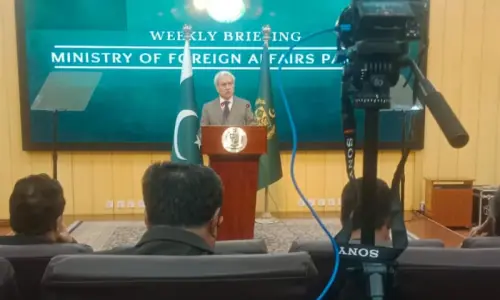
Foreign Office (FO) spokesperson Tahir Hussain Andrabi said on Sunday that Pakistan welcomed Iran’s offer of mediation between Islamabad and Kabul and would “not shy away from” it.
“Iran is a brotherly, friendly country. Pakistan is always in favour of finding peaceful resolutions of issues through dialogue and diplomacy, and we appreciate the offer of mediation of our brotherly country, Iran,” Andrabi told Dawn upon a query about reports that Tehran was working to convene a regional meeting for mediation between Islamabad and the Afghan Taliban.
“We believe that Iran can play an important role. We would not shy away from any mediatory role by Iran. Mediations are always welcome,” Andrabi said, adding that Pakistan had a “very strong case”.
He further stated: “Generally, mediations are resented by a country or a side which is on a weak legal or a political case. Pakistan’s case on this issue, on terrorism emanating from Afghanistan, is very strong. So, obviously we will not shy away from mediation.”
Pakistan, which has been grappling with the problem of terrorism for long, has been demanding that the rulers in Kabul take action to stop cross-border terrorism. But, the Afghan Taliban deny Islamabad’s allegation of terrorists being allowed to use Afghan soil to carry out attacks in Pakistan.
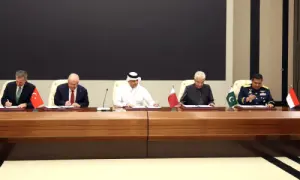
Earlier this month, a third round of talks between Islamabad and Kabul, which were taking place in Istanbul in the presence of mediators from Turkiye and Qatar, broke down without any agreement, as negotiators failed to bridge deep differences over how to prevent cross-border terrorism. The talks had followed deadly border clashes between the two neighbours in October.
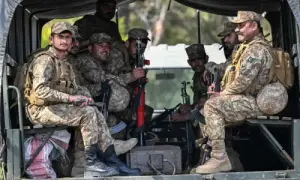
The border clashes between Pakistan and Afghanistan started late on the night of October 11 and continued into the next morning. The Inter-Services Public Relations (ISPR) said that 23 Pakistani troops were martyred and 200 Taliban and affiliated terrorists were killed when Islamabad responded to aggression by Kabul.
Afghanistan claimed it carried out the attack as a “retaliatory” measure, accusing Islamabad of conducting air strikes in its territory. For its part, Islamabad did not confirm or deny whether it was behind the strikes, but maintained that Kabul should “stop harbouring the Tehreek-i-Taliban Pakistan on its soil”.
After the initial skirmish on Oct 11, multiple others took place along the Pakistan-Afghanistan border. Meanwhile, strikes by Islamabad also targeted Gul Bahadur group camps in Afghanistan.
A ceasefire was then agreed upon on the evening of October 15, and eventually, the two sides came together for dialogue in Doha. After the Doha talks, a temporary ceasefire continued to prevent border hostilities while the two sides committed to reconvene in Istanbul to work on mechanisms for lasting peace and stability between the two countries.
On October 25, the second round of talks between the two sides began in the Turkish capital. But, Information Minister Attaullah Tarar announced in a post on X on October 29 that the talks “failed to bring about any workable solution”. He also asserted that Pakistan would continue to take all possible measures to protect its citizens from terrorism.
However, mediators Turkiye and Qatar intervened and managed to salvage the dialogue process with an October 31 joint statement released by Turkiye stating that “further modalities of the implementation will be discussed and decided” during a principal-level meeting in Istanbul on November 6.
But on November 7, Defence Minister Khawaja said that talks addressing cross-border terrorism were “over” and “entered an indefinite phase” as negotiators failed to bridge deep differences between the two sides.
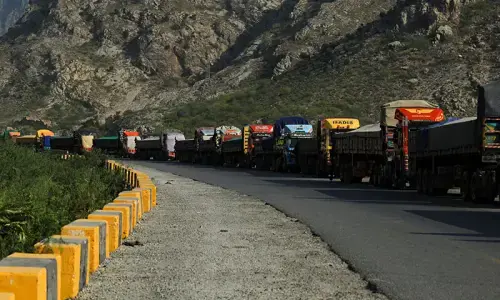
Following the failure of the talks, the Afghan Taliban have suspended trade ties with Pakistan.
Earlier this week, the foreign ministers of Iran and Russia called for continued dialogue between Pakistan and Afghanistan to resolve their ongoing disputes on cross-border terrorism.
Previously on Nov 9, Iranian Foreign Minister Abbas Araghchi said he had spoken with his Pakistani and Afghan counterparts, Ishaq Dar and Amir Khan Muttaqi, discussing bilateral ties as well as the recent negotiations in Istanbul between Islamabad and Kabul.
According to Iran’s state-run IRNA news agency, Araghchi had also expressed Iran’s readiness for any kind of assistance to resolve differences between the two countries.
The same day, Turkish President Recep Tayyip Erdogan said his Foreign Minister Hakan Fidan, Defence Minister Yasar Guler and intelligence chief Ibrahim Kalin would visit Islamabad next week to discuss tensions between Afghanistan and Pakistan.
Meanwhile, Pakistan continues to suffer casualties among its security forces and civilian population in terror attacks, which authorities link to Afghanistan.