Restoration of 550-year-old Ain Fort begins in Rawalakot
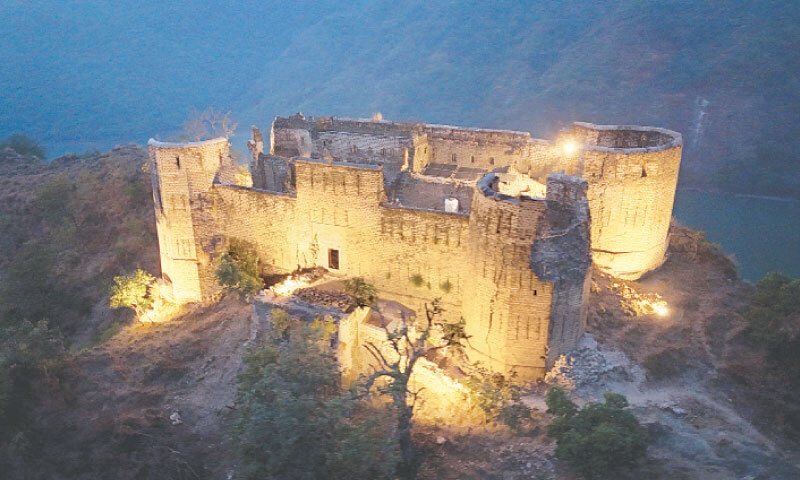


ISLAMABAD: Ain Fort in Rawalakot has long remained out of sight, surrounded and buried under layers of forest and history.
Now, for the first time since the creation of Pakistan, the Himalayan Wildlife Foundation has begun restoring the more than 550-year-old ancient marvel.
For travellers drawn to layered histories and natural beauty, the site could emerge as one of the region’s most intriguing heritage destinations.
The exact construction date of Ain Fort is unknown, though it is believed to have been built around 1460 AD by the Shah Mir rulers of Kashmir and later fortified after Emperor Akbar annexed Kashmir in 1587. It was further strengthened during the Dogra period from 1858 to 1947.
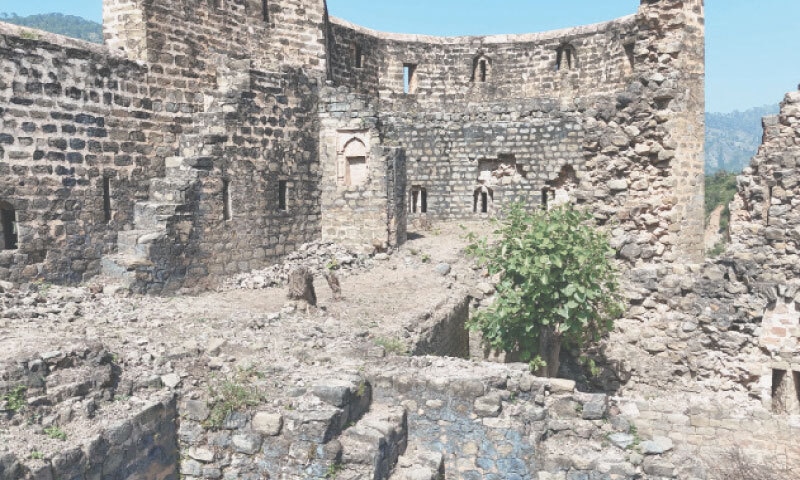
The fort served as a customs post, forest post and military outpost, forming part of a chain of forts including Baghsar, Mangla, Ramkot and Throchi, all located roughly seven to 20 kilometres apart.
Ain Fort is situated at the narrowest crossing point of the Jhelum River. Before restoration began, the structure was in a dilapidated condition and close to collapse.
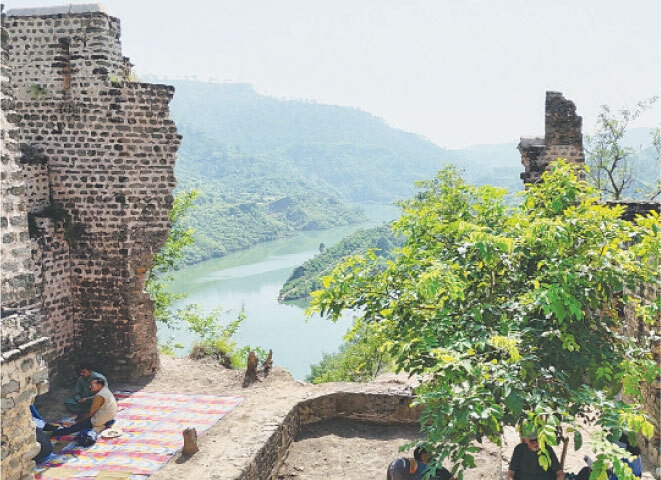
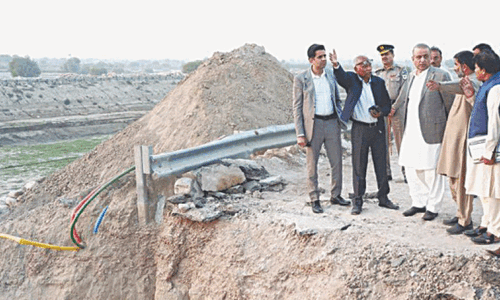
After an hour-and-a-half drive from Islamabad to Kahuta, visitors can reach a newly built pedestrian bridge on Azad Pattan Road. From there, a 15 to 20-minute speedboat ride takes them to the base of the mountain on which the fort stands.
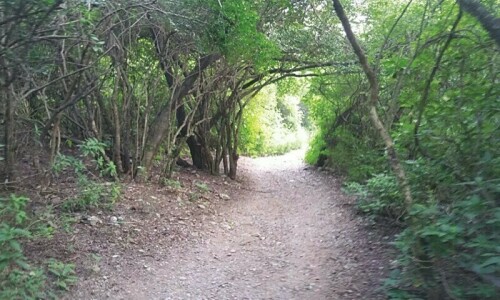
A further 15-minute hike leads to the imposing structure at the summit, offering a commanding 360-degree view of the surrounding landscape. Alternatively, visitors can travel via the Karot hydropower plant and complete the journey on foot, a trek of approximately two and a half hours.
“We want tourists to visit the fort even as conservation and restoration work continues, which began two months ago. The site is significant not only for local culture but also for archaeological research,” said Dr Anis Rehman of the Himalayan Wildlife Foundation, who is leading the conservation effort. “It will be especially valuable for students, who can observe how lime mortar was prepared more than 500 years ago and learn traditional masonry through guided tours.”

The project is being funded by the Pakistan Poverty Alleviation Fund (PPAF) in collaboration with the government of Azad Jammu and Kashmir and the National University of Sciences and Technology (Nust). Nust is providing computer-based designs to help restore key archaeological features. The conservation work followed nearly two years of procedural approvals.
Full restoration of the fort is expected to take another six months.

According to Dr Rehman, the restoration process is particularly delicate. Trees, bushes and shrubs had overtaken the fort, with trunks penetrating its walls. “Cutting trees can cause the walls to collapse. The uncontrolled vegetation has to be managed carefully,” he said.
The restoration will rely on traditional materials such as stone and lime to preserve the fort’s
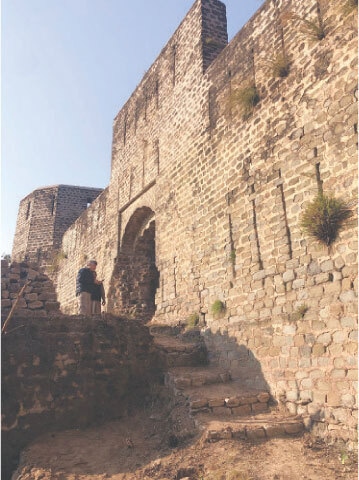
authenticity. “The plan is to preserve the soul of the place by reinforcing collapsed walls, clearing invasive vegetation and restoring key structures,” he said, adding that the aim was not to turn the site into a manicured tourist spot, but to stabilise it and make it accessible for heritage tourism.
Published in Dawn, December 29th, 2025