

• Report finds lending to private sector lowest in Pakistan
• Undocumented economy is 40pc of GDP
KARACHI: The advances to deposits ratio (ADR) further declined from 50 per cent in December 2024 to just 35pc as of June this year, while the investments to deposits ratio (IDR) surged from 90pc to 100pc during the same period, according to a report.
The Banking Publication 2025 titled “Banking Forward: Journeying Towards Future Horizons” released by PwC-A.F. Ferguson on Friday said Pakistan’s ADR remains significantly lower than Bangladesh at 87pc, India at 79pc and Sri Lanka at 59pc. In contrast, Pakistan’s IDR of 100pc is much higher than Bangladesh at 29pc, India at 33pc and Sri Lanka at 47pc.
According to the report, priority sector financing continues to remain at sub-optimal levels, with SME contribution to total loans at 3.7pc and agriculture at 4pc. In comparison, SME lending as a percentage of total loans is considerably higher in other countries, including Indonesia at 19pc, Bangladesh at 17pc and India at 16pc.
Meanwhile, lending to the private sector declined to 11pc of GDP in 2024. Conversely, the IDR has increased sharply, rising from 40pc in 2010 to 93pc in 2024 and reaching 100pc as of June 2025.
According to the report, SMEs and the agriculture sector are central to Pakistan’s economy, together representing millions of enterprises across both formal and informal segments. Agriculture contributes 24pc to GDP, while SMEs account for 40pc of GDP, 90pc of enterprises, 30pc of export earnings and employ nearly 30pc of the workforce.
Agricultural borrowers increased by 200,000, reaching 2.9 million by June 2025, while SME borrowers rose by over 55pc to 277,000 during the same period.
The report said industry experts emphasised that a large share of Pakistan’s transactions remains cash-based, contributing to an undocumented economy estimated at 40pc of GDP. Digitising a portion of these transactions could save Rs164 billion annually, while reducing the undocumented economy by 25pc has the potential to unlock over Rs1 trillion in resources, the report added.
As of June 2025, agricultural financing rose to Rs739bn, accounting for 5.2pc of total loans, up from 3.4pc in December 2024. SME lending increased to Rs712bn, representing 5pc of total loans.
Recent initiatives by the regulator and the industry have led to notable progress, with financing to priority sectors surpassing 10pc of total loans, indicating a reversal of historical declining trends. “Despite this positive trend, financing levels remain low compared to regional peers, highlighting the need for expanded credit interventions,” the report said.
Experts also emphasised the need for sustained fiscal discipline, comprehensive tax reforms, improved governance of state-owned enterprises and reduced government debt to maintain and strengthen economic progress, according to the report. “The urgent need to diversify and expand exports has been stressed upon, advocating a shift from consumption-driven growth to a value-added export base,” it added.
Experts further highlighted that boosting domestic investment and productivity is critical for successful import substitution, which requires removing bureaucratic hurdles, simplifying regulations and creating an investor-friendly environment.
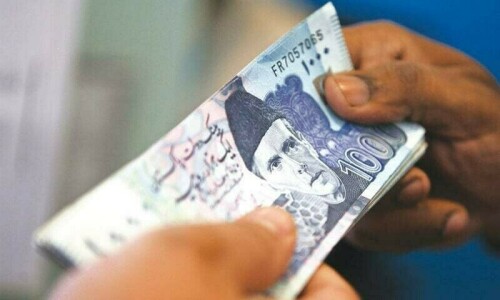
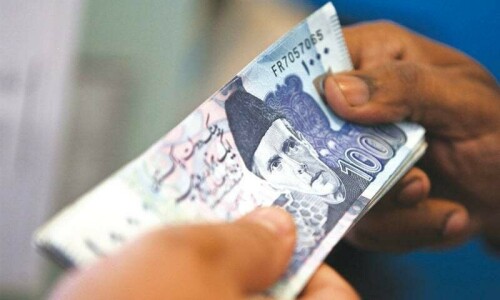
Cash continues to pose a challenge to financial inclusion and digitisation, with Pakistan’s cash-in-circulation ratio at 34pc, compared to Bangladesh at 16pc, India at 15pc and Kenya at 9pc, the report noted.
In Pakistan, paper-based transactions account for 14pc of total transactions, while ATM traffic constitutes 25pc of e-transactions.
“There is greater need for broader government and regulatory push to create a wider ecosystem that incentivises digital and disincentivises cash,” the report said.
The report added that the State Bank of Pakistan’s instant payment system, Raast, recorded 45 million registered IDs by June 2025 and processed 1.3bn transactions worth Rs29.6tr, more than doubling in both volume and value compared to the previous year. It said the number of QR-enabled merchants also crossed one million, twice as many as a year earlier.
However, adoption remains uneven across the economy. Only about 159,000 merchants currently use point-of-sale terminals, far fewer than in comparable emerging markets, while mobile banking penetration stands at roughly 15pc of total bank accounts, the report said.
Published in Dawn, December 27th, 2025