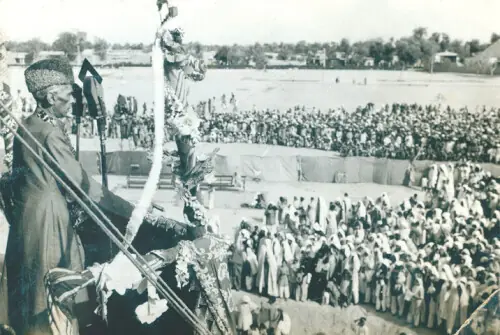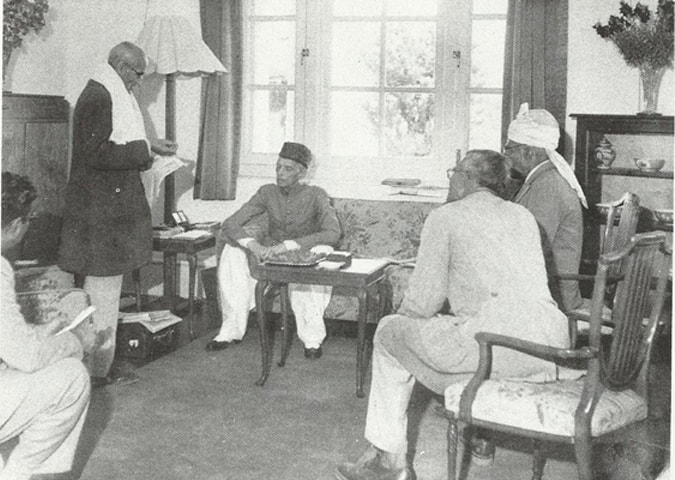
AT present, Pakistan is confronting a state of unending turmoil and an immense democratic predicament primarily caused by its own inability as a nation to embrace the values of democracy, interfaith harmony and pluralism. The perpetual absence of political will to protect these principles has resulted in deepening injustice, sectarian discord and the marginalisation of our minorities. This not only damages the country’s global image, it also violates Quaid-i-Azam Mohammad Ali Jinnah’s vision of an egalitarian and democratic nation state where the rule of law would ensure justice and equality for every citizen.
The country’s frail democratic culture is also an outcome of failure on the part of our leaders to absorb the intrinsic worth of the Quaid’s inspirational leadership, vision, set of values and his aspirational insight.
Currently, Pakistan’s political structure appears incapable of initiating both a discourse as well as a deliberation on central problems that have come into play due to shifting global power dynamics, national politics, and security in the region. In fact, the political narratives have been inward looking and successive political leaderships largely dominated by unelected elements, which has kept the country from treading the democratic path. The most suitable way to settle political issues is through consistent dialogue in an accommodating and affable fashion. The undemocratic approach has only led to an unstable, deeply polarised political environment, negative economic progress, and persistent decline in Pakistan’s law and order situation. Every aspect of national life remains scarred by divisions and injustice as corruption reigns supreme. Political intolerance has jeopardised the democratic process, and left the people of the country significantly disillusioned. A crisis of identity and leadership, excessive centralisation of power, and increasing socioeconomic disparity, is fueled further by poor education along with an inadequate healthcare infrastructure.
Jinnah’s long road
The ruling elite has lost sight of the founding father’s challenges. Quaid-i-Azam Mohammad Ali Jinnah had envisioned Pakistan as a harmonious and inclusive society. After Jinnah became a member of Muslim League in 1913, he decided to build political awareness among Muslims. Realising the importance of cooperation between the two largest communities, he tried to unite Hindus and Muslims through the Lucknow Pact in 1916. Unfortunately, the communal nature of Congress politics did not favour the interests and rights of Muslims. This became clear as day during the movement for restoration of Khilafat (1919-1924). It is important to remember that at the time Muslims faced poverty, mistreatment, social injustice, and discrimination in an environment that lacked pluralistic values.
For the British, India was considered the “brightest jewel in the crown” due to its immense commercial potential and strategic importance. Britain’s Industrial Revolution accelerated trade between the two regions, enabling its textile industry to flourish at the expense of the Indian traditional textile sector. As the British pursued their own economic and political interests, socioeconomic inequality and poverty grew, triggering mass anger and frustration.
Jinnah’s 14-pointcharter espoused inclusiveness and the political participation of all communities. These points protected the political and economic freedoms of Muslims, along with their education, culture, language, religion, personal laws, and institutions to ensure unity in the community.
Christian missionaries expanded their efforts to convert Indians to Christianity as well as create a servile educated class shaped by Western values.
Thomas Macaulay advocated an English-based education system, leading the government to establish schools that promoted Western ideas. These reforms, however, did little to promote harmony. Instead, they marginalised local cultures and indigenous belief systems. Class divisions and British cruelty further contributed to social discord in a society far removed from democratic principles. British attitudes and oppression created an awakening among Indians who understood that their local traditions stood diminished and their talent exploited and unacknowledged.
The Simon Commission in 1927 caused widespread unrest and boycotts. Soon after, an all-India conference was organised to counter the British narrative that the Indian political leaders were incapable of shaping a constitution for their country. The Nehru Report proposed a unitary form of government and rejected a separate electorate system for Muslims. In doing so, it violated the Lucknow Pact, and became the turning point.
The path to Pakistan
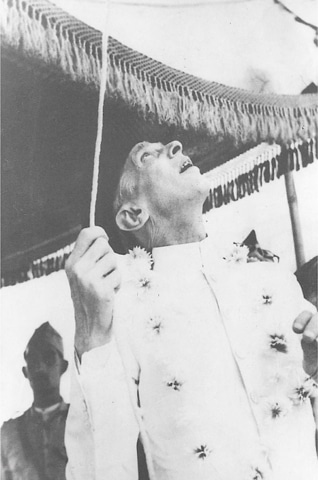
The Quaid-i-Azam’s 14-points, unlike the Nehru Report, charted the legal structure of a true democracy and recommended a federal system with provincial autonomy. The charter is the culmination of Jinnah’s experiences and observations during the dark circumstances of British India. His 14-point agenda espoused inclusiveness and the political participation of all communities. These points protected the political and economic freedoms of Muslims, along with their education, culture, language, religion, personal laws, and institutions to ensure unity in the community. The seventh point established a pluralistic society with “full religious liberty, ie, liberty of belief, worship, observance, propaganda, association, and education for all communities of India.” Further, the Quaid’s fourteen points laid the foundation of a multicultural society and interfaith harmony, illustrating his firm belief in pluralism, inclusivity, and equal rights. The contract safeguarded the adequate representation of minorities in all legislatures and governing bodies. He viewed minority safeguards as a fundamental political necessity rather than a privilege for Muslims. The eighth point stated that “No bill or resolution or any part thereof shall be passed in any legislature or any other elected body if three-fourths of the members of any community in that particular body oppose such a bill, resolution or part thereof on the ground that it would be injurious to the interests of that community.” The third point structured the rights of minorities and provided that “in all legislatures in the country and other than elected bodies shall be constituted on the definite principle of adequate and effective representation of minorities in every province without reducing the majority in any province to a minority or even equality.” In his presidential address at the All-India Muslim League session in 1934 in Delhi, Jinnah declared that “in the name of humanity, I care more for them (the untouchables) than for Muslims.” M. C. Rajah, a prominent leader of the Hindu Untouchables had deep admiration and gratitude for Jinnah. He appreciated the fact that while advocating Muslim rights, Jinnah did not sideline the interests of other marginalised groups who would otherwise be “crushed under the steamroller of a caste Hindu majority acting under the influence and direction of Mr. Gandhi.” Eventually, following a string of constitutional plans, Jinnah’s key points were included in the Government of India Act of 1935. After the elections in 1937, it became abundantly clear that the Hindudominated character of the Congress will not protect Muslim interests and progress. Hence, Muslims moved towards the All India Muslim League which, restructured by Jinnah, passed a resolution in 1940.
With this, not only did the Muslim League’s popularity rise but so did the call for a separate homeland.
The AIML soon turned into a movement led by the great leader. The Quaid’s idea of nationhood was rooted in secularism, and a strong faith in democracy. Today, his words at the time of independence hold immense value: “Islam and its idealism has taught us democracy. It has taught us equality of men, justice, and fair play to everyone. In any case, Pakistan is not going to be a theocratic state.” Jinnah emphasised that both Muslims and non-Muslim communities will have equal rights and freedoms, that equal citizenship and protection of minorities would strengthen Pakistan.
“Without any distinction of caste and creed” Quaid-i-Azam Mohammad Ali Jinnah was fired by the intense belief that Muslims, with their distinct culture, territory, and demographic identity belonged to a separate nation – an idea that is enshrined in the Lahore Resolution of March 23, 1940. SM Burke argues that given the policy of His Majesty’s Government regarding the gradual development of self-governing institutions in India, a government in India was possible without Gandhi but without Jinnah, there would never have been a Pakistan.
The Quaid’s leadership was transformational because it was receptive to ideas grounded in reason.
He underlined the need for unity in conflict.
Impressive and charismatic, Jinnah was of an exceptional temperament: patient, resilient, and composed even in crises. Sir Aga Khan III, a contemporary of Quaid -e-Azam, stated that “Of all the statesmen that I have known in my life — Clemenceau, Lloyds George, Churchill, Curzon, Mussolini, Mahatma Gandhi — Jinnah is the most remarkable.
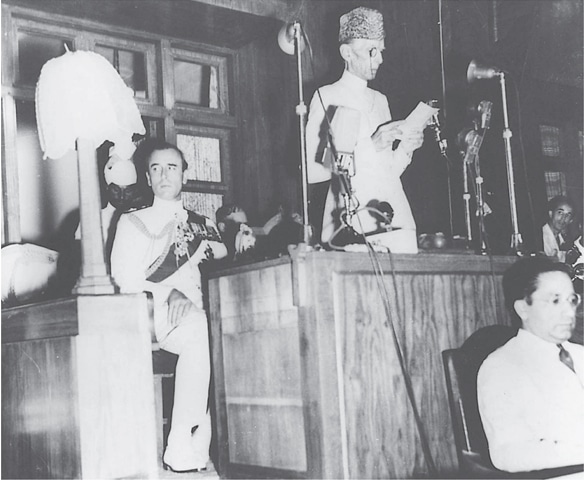
None of these in my view outshone him in strength of character, and in that almost uncanny combination of prescience and resolution which is statecraft.” Jinnah envisioned Pakistan as a democratic and inclusive nation state where the rule of law would ensure equality for all citizens. During a press conference in Delhi on July 14, 1947, before assuming the office of Governor-General of Pakistan, Quaid-i-Azam was clear that “minorities to whichever community they may belong, will be safeguarded. Their religion or faith or belief will be secure.” He also assured that “minorities will be, in all respects, the citizens of Pakistan without any distinction of caste and creed.” On August 11, 1947, in his historic address to the Constituent Assembly, Jinnah outlined the future direction of the new state. He stressed the importance of maintaining law and order, elimination of bribery, corruption and nepotism, and the necessity of equal citizenship, regardless of caste or creed, as defining values of Pakistan. In February 1948, our leader reaffirmed that Hindus, Christians and Parsis in Pakistan were equal citizens — a principle he viewed as an essential corollary of democratic responsibility.
Pakistanis were thus empowered by the father of the nation to revive democratic ideals and strengthen their belief in constitutionalism, equality, justice, and the rule of law. Jinnah changed the map of the world with Pakistan. But after him, his land has been caught in the cycle of leadership and constitutional crises.
The moral decay set in early. In the 1950s, the centralisation of power and the denial of provincial autonomy gave rise to conflict over language and identity — issues that were mishandled by the ruling elite. In the following decade, bureaucratic insensitivity towards ethnic nationalism and rising provincialism increased intolerance and inculcated a sense of deprivation. These tensions ultimately contributed to the disintegration of Pakistan in 1971, following the failure of political dialogue among top elites.
Pakistan also failed to uphold the principles of pluralism, democracy, and genuine interfaith harmony.
Instead, it enabled radicalisation, and now faces a formidable challenge in the form of terrorism. This is driven by the misconception that different cultures cannot coexist and must merge into a single dominant culture. Extreme ideologies suppress both freedom of conscience and cultural diversity, which are essential for societal progress.
Jinnah’s vision of a pluralistic society was at the heart of Pakistan’s creation – a response to the marginalisation of Muslims in India. The idea of freedom and equality was central to the Quaid’s thoughts. In his speeches, Jinnah asserted that discrimination based on religion, caste, or creed would prove disastrous for Pakistan. He also said that the creation of Pakistan as a sovereign state is “unprecedented and there was no parallel in the history of the world.” The Constitution of 1973 renewed hope for the values of democracy, tolerance, and peace as it provides the framework for a pluralistic society: Article 25 guarantees equality of all citizens; Article 37 ensures social justice; Article 36 safeguards the rights of minorities. Proper implementation of these constitutional guarantees will strengthen federalism, freedom, and social justice.
Pakistan’s electoral system also provides space for women and minorities — groups often marginalised in majoritarian political systems. By rebalancing constitutional safeguards, decentralising power, and empowering minority communities, Pakistan must strive for pluralism, cultural diversity, and democratic resilience.
As a multiethnic society, Pakistan must transform into a bastion of religious tolerance and enlightenment. These values will forge a strong bond between the state and its citizens. SM Burke rightly acknowledges that if Pakistanis learnt to govern themselves efficiently, their country would be an impressively thriving land. This alone promises to be the greatest tribute this nation can pay to its founding father.
Freedom and democracy are essentials of a flourishing political culture. Democracy withers without freedom. And freedom has no meaning without democratic values. The current tumultuous situation in the country has damaged freedoms. Thus Pakistan’s political leadership must return to the Quaid’s principles, demonstrate ideological resilience, celebrate cultural diversity, and resolve to sustain peace, tolerance, and democratic stability.
Complex challenges require political solutions. The pluralistic vision of Quaid-i-Azam Mohammad Ali Jinnah provides the blueprint for progress, unity, fairness and national dignity.
The writer is professor and director, Pakistan Study Centre, University of Sindh, Jamshoro.