The complexities of development and policymaking


 0
0

In 2011, economist Dani Rodrik warned that post-industrial countries would face economic underperformance, widening inequality, and divisive politics as their manufacturing industries declined rapidly. His research revolves around globalisation, economic growth and development, and the political economy.
Pakistan can also be included in this group of states struggling to achieve sustainable and inclusive development. The State Bank of Pakistan (SBP) has made a token cut in its key policy rate by 50 basis points to 10.5 per cent to “support sustainable economic growth”.
Looking ahead, the central bank acknowledged that the global environment remained challenging for exports amid evolving trade dynamics and tight financial conditions. However, it said the real GDP growth for FY26 is expected to remain in the upper half of the earlier projected range of 3.25–4.25pc.
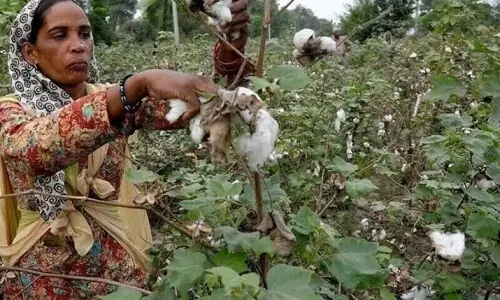
The views of the SBP Monetary Policy Committee, however, are not shared by analysts and industry experts, particularly related to the textile sector. The heavy dependence on external borrowings to shore up the foreign exchange reserves is also continuing, and claiming ‘robust momentum across key sectors’ with 8pc unemployment brings such claims in the realm of incredulity, says a Business Recorder editorial.
Pakistan continues to grapple with restorative measures while weak political will and bureaucratic resistance to reforms persist
Even if the move signals a strategic shift while attempting to balance the need to support a struggling economy with the imperative to maintain recently achieved macro-stability, a Dawn editorial says the rate cut is too small to make a significant impact. “Without broader fiscal, governance and business reforms,” it adds, “even a substantial rate cut is unlikely to rev up growth prospects.”
According to the State Bank, foreign direct investment inflow declined by 25pc to $0.93 billion during July-November FY26 from $1.242bn in the same period last year.
After receiving a $1.2bn tranche, Pakistan agreed to 11 new International Monetary Fund (IMF) targets, including new tax measures and expenditure cuts early next month, to keep the $7bn External Fund Facility on track. The IMF Staff Report indicates that bureaucratic resistance to reforms is a major hurdle, while analysts note that political will remains weak due to lingering political instability.
The combined financial package of $940bn from the Asian Development Bank and World Bank, Dawn analysts note, will support Pakistan’s reforms agenda and resilient development strategy to protect the people and the environment and offer the country much-needed support to deepen its recent stabilisation. But they add, “The long-term benefits hinge on transparency and the timely implementation of projects for ensuring sustainable growth. Pakistan will continue such bailouts to limp on in the absence of credible progress on the economic reforms agenda.”
Encouraged by their own perception of macroeconomic stability, policymakers are struggling to achieve sustainable, inclusive growth, which critics say remains elusive.
Prime Minister Shehbaz Sharif termed the recent launch of the regulatory framework as a “quantum jump” that would facilitate the business community, industry, agriculture and foreign direct investment. It would also eliminate the “immense waste of time and resources” in the country that led to corruption and nepotism.
Speaking at the same event, Special Assistant to the Prime Minister for Industry and Production Haroon Akhtar Khan said among the many reforms the government was undertaking, one stood out as foundational: the transformation of Pakistan from a regulatory state into a developmental state.
While providing an update on the work of the Cabinet Committee on Regulatory Reforms, Mr Khan said the panel’s substantial achievements include a comprehensive review of the Companies Act 2017, with over 280 proposed amendments to reduce compliance burdens on private sector firms, and the simplification of outdated resolutions and approvals.
The PM also noted that the Securities and Exchange Commission of Pakistan and the Drug Regulatory Authority of Pakistan had undertaken regulatory modernisation and transformation.
He reportedly ordered the concerned ministries and entities to devise a mechanism for fast-tracking the implementation of strategic projects, with immediate focus on Diamer-Bhasha Dam.
Presiding over a high-level meeting on hydropower projects, the prime minister directed that full support must be extended by the district and local administration, with the backing of the respective provincial government, to expedite the execution of Water and Power Development Authority projects.
One may note here an issue cropping up in the exploitation of mineral resources. Former Senator Nawabzada Lashkari Raisani and Awami National Party Balochistan President Asghar Khan Achakzai have decided to launch a joint struggle to protect Balochistan’s natural resources by repealing the Mines and Minerals Act.
They told a press conference that they will contact other political parties as well, convene a joint meeting, finalise recommendations and present them in the assembly through members of political parties represented in the provincial assembly.
Mr Raisani said the objective was to introduce amendments in the Act that were strictly in the interest of the people of Balochistan, in line with the 18th Amendment and the Constitution, so that the dignity, rights, and future of coming generations of Balochistan could be protected.
Stressing the importance of taking all the federating units along at the laptop scheme launching ceremony on Dec 17 in Haripur, the prime minister said, “National progress could only be achieved when every region was uplifted and provided equal opportunities.”
Published in Dawn, The Business and Finance Weekly, December 22nd, 2025