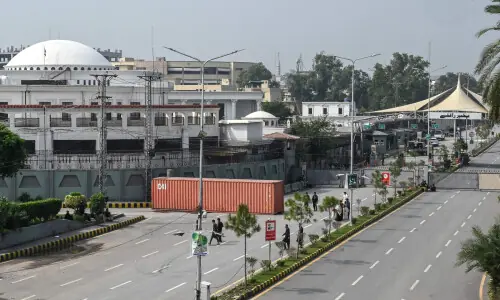
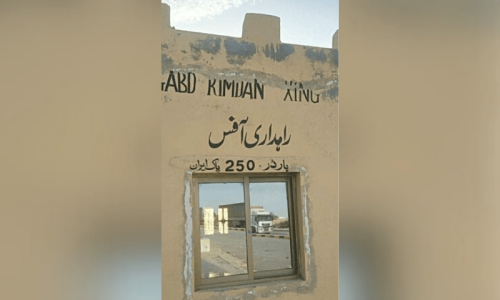
ISLAMABAD: Traders from Chaman town have travelled to the capital to press the government for the reopening of a key crossing with Afghanistan, saying a closure of more than two months has paralysed trade and inflicted staggering financial losses, a member of the delegation said on Friday.
All border crossings along the 2,600-kilometer frontier have been shut since Oct 11 after ground fighting and retaliatory Pakistani airstrikes killed dozens, marking the most intense conflict since the Taliban took control of Kabul in 2021.
The trade standstill is exacerbated by the Taliban’s refusal to allow United Nations humanitarian aid to enter Afghanistan through Pakistan’s land route.
The traders have held a series of meetings with government officials, including Federal Minister for Commerce Jam Kamal Khan, and sought their help in reopening the border, the second key crossing with Afghanistan, the former president of the Chaman Chamber of Commerce and Industry told Dawn.
Business leaders say months-long border closure costs millions daily
“Stakeholders highlighted severe socio-economic impacts of the closures, including financial losses for traders, disruptions in the export of perishable goods, rising unemployment, and hardships faced by the local population that relies heavily on the cross-border trade,” the Ministry of Commerce said in a statement.
The meeting with the minister focused on the challenges arising from the frequent and prolonged closure of the Pak-Afghan border crossing at Chaman.
The commerce minister assured the delegation that their concerns would be raised with relevant authorities. However, he clarified that the decision was not under his ministry’s sole control. The ministry said the decision “was taken by the government, based on broader national considerations”.
The minister pledged to explore “sustainable, predictable, and transparent border management solutions that balance security requirements with the need to promote lawful trade and economic activity”.
Another official, Rana Ihsaan Afzal, coordinator to the prime minister on commerce, took a similar stance in a Dec 17 meeting with the traders, reaffirming the government’s commitment to address the challenges.
Business leaders in the Khyber Pakhtunkhwa also said the closure has deeply affected trade volumes, employment, revenues, and regional connectivity.
One trader said the closure has “paralysed a vital trade corridor worth billions of dollars annually.” Daily exports of goods such as cement, sugar, citrus fruits, potatoes, and medicines can reach $50 million to $60m during peak seasons.
Local exporters claim daily losses of over $4m, with billions of rupees worth of value-added products and raw materials stranded at the crossings.
Published in Dawn, December 20th, 2025