Big industry output surges 8.3pc in October
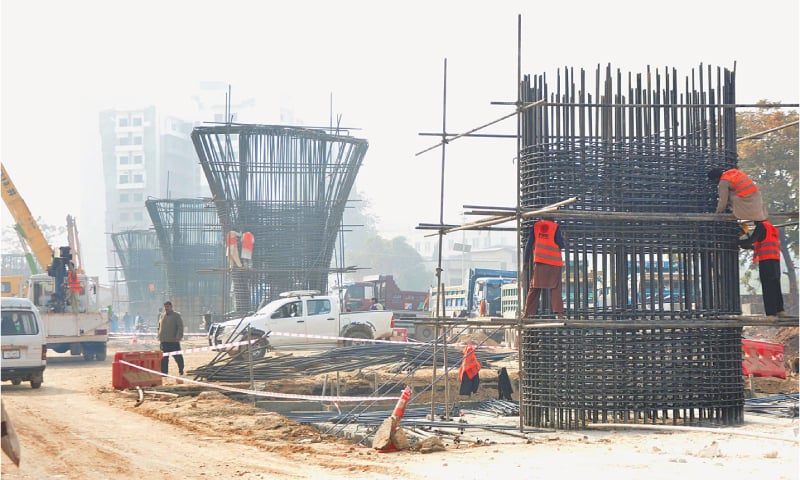

ISLAMABAD: The large-scale manufacturing (LSM) sector posted a year-on-year growth of 8.33 per cent in October, indicating a revival in the country’s industrial production.
The rebound for the second consecutive month offers a hope amid ongoing economic challenges, according to figures released by the Pakistan Bureau of Statistics on Friday.
The growth in October was led by automobiles, petroleum products, apparel, construction-linked industries, beverages, and electrical equipment, pointing to both consumer demand and investment-related activity picking up.
On a month-on-month basis, the LSM recorded a growth of 3.75 per cent in October, indicating a modest recovery in industrial output. The improvement suggests that the adverse impact of recent flooding on industrial activity has largely subsided, allowing for a gradual stabilisation in production across key sectors.
The current fiscal year saw a robust growth of 8.99pc in July, which moderated to 0.54pc in August, then slightly reversed to 2.69pc in September. The LSM posted a 5.02pc year-on-year increase during the first four months of 2025-26, mainly due to good performance of automobile and cement sectors.
In FY25, the LSM recorded a negative growth of 0.74pc compared to the preceding year. LSM, which contributes nearly 8pc to GDP, contracted in the FY25 falling far short of the growth target of 3.5pc for the FY25.
According to finance ministry, this upturn underscores how macroeconomic stability is translating into real-sector growth. With inflation easing, financing conditions improving, and energy and input-related pressures gradually softening, manufacturers are seeing better capacity utilisation, restocking, and renewed expansion activity. Overall, the trend reinforces a positive outlook for investment, industrial expansion, and economic growth in Pakistan, as stability, demand, and confidence continue to align, it further said.
The food group surged by 5.02pc in July-October FY26 on a YoY basis. Wheat and rice milling experienced a rise of 7.40pc, starch and its products 0.10pc, respectively. Wheat and rice milling increased substantially during the period under review, owing primarily to improved crop harvests. However, cooking oil production increased 5.40pc, but vegetable ghee production fell 1.09pc. However, tea blended declined by 5.43pc.
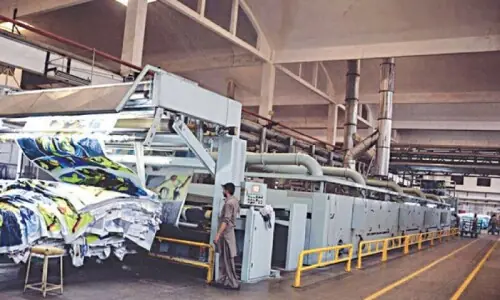
The overall textile sector partly posted a growth of 1.58pc in 4MFY26 on a YoY basis. Cotton yarn has increased by 2.23pc, while cotton cloth has increased by 0.26pc, accounting for more than 80pc of the textile sector. The primary cause of the slowdown in production was a slight decline in export unit value in the face of higher lower demand for textiles.
The exports of garments recorded a growth of 4.69pc on a YoY basis. However, the garment sector recorded a double digit growth of 10.99pc in October 2025 from a year ago. This rebound in garments production from the previous month sluggish growth indicate a revival in export orders from the sector.
Coke and petroleum products surged 12.25pc in 4MFY26. The maximum petroleum products posted a positive growth in production during the months under review. The petrol production up by 8.04pc, jet fuel oil 21.75pc. However, furnace oil production dipped 14.27pc.
However, the production of high-speed diesel rose by 21.75pc, followed by the production of kerosene by 1.75pc, LPG by 13.71pc, and lubricating oil 44.69pc.
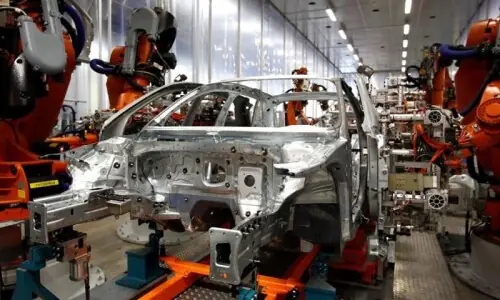
The automobile sector grew 78.89pc in 4MFY26 on a YoY basis. This growth was mainly contributed by a growth of 79.71pc in jeeps and cars, followed by LCVs 5.84pc, trucks 122.55pc, and buses 39.44pc. However, the production of diesel engines up by 3.45pc during the months under review. The production of pharmaceutical products dipped 6.68pc. However, the production of fertilisers posted a paltry growth of 0.24pc, respectively.
Iron and steel production declined 3.25pc in 4MFY26. Billets/ingots, mostly consumed in the construction industry, experienced a 9.30pc decline. Similarly, H/CR sheets/strips/coils/plates dipped by 0.76pc. The production of rubber products surged by 12.03pc, non-metallic minerals by 13.45pc and electrical equipment 6.26pc.
Published in Dawn, December 20th, 2025