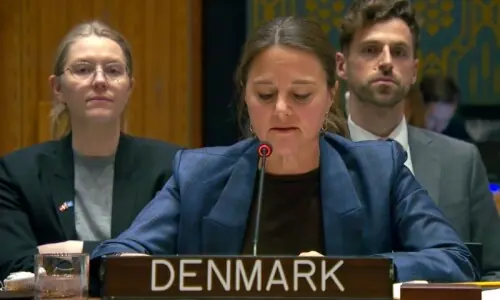
YET again, the UN Security Council’s monitoring report on Afghanistan has painted a grim picture of the presence of transnational terrorist groups on Afghan territory. The report, a regular feature, reiterates that Afghanistan remains a staging ground for some of the most lethal terrorist outfits in the world. Pakistan, which has been a victim of the TTP, based in Afghanistan, has known this painful reality for years.
The report notes that over 20 international and regional terrorist organisations currently call Afghanistan home. These include IS-K, Al Qaeda, the TTP and ETIM, among others.
With the exception of IS-K, these groups have good relations with the Afghan Taliban. Importantly, the report says that the Taliban’s claims that no militant groups are based on their soil are “not credible”.
For Pakistan, the TTP — largely due to the permissive environment it enjoys under Afghan Taliban rule — poses a major security challenge. The UN document says that the terrorist group has conducted over 600 attacks against this country in the current year.
Moreover, TTP chief Noor Wali Mehsud is believed to spend time in Kabul, while other anti-Pakistan terrorists, such as Gul Bahadur, are also based in Afghanistan.
The report highlights links between the TTP and Al Qaeda, as well as ETIM. Ittehad-ul-Mujahideen Pakistan, said to be a front for TTP and Al Qaeda fighters, is amongst the other terrorist groups active next door. Meanwhile, another matter of grave concern is the presence of madressahs run by IS-K near the Pakistani border.
The details mentioned in the UN report shatter any illusion that Taliban-run Afghanistan poses no threat to its neighbours. On the contrary, just as it used to be before the US-led invasion, Afghanistan has become a safe haven for extremely dangerous and violent militant outfits that threaten the region and the world.
And while the report says that there are differences within the upper echelons of the Taliban leadership on how to deal with the TTP, Kabul’s rulers are unlikely to take action against the group, as the regime may actually “lack the ability to do so”.
This should be a matter of great concern for the international community, particularly Afghanistan’s neighbours. Nearly all states bordering Afghanistan have experienced terrorist attacks carried out by groups based on Afghan soil, with Pakistan the hardest hit.
The way forward does not seem to be clear-cut. More conflict between Pakistan and Afghanistan will not solve the problem in the long run. Talks with the Kabul regime have also failed to provide meaningful outcomes.
In such a situation, perhaps the least bad option is to reach out to the relatively ‘moderate’ elements within the Taliban set-up, and press upon them the need to stop terrorists from threatening Afghanistan’s neighbours.
Published in Dawn, December 19th, 2025