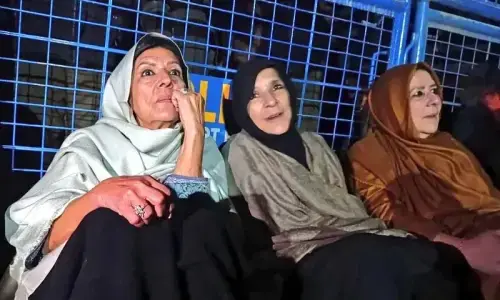
THE use of force this week against protesters outside Adiala Jail, where former prime minister Imran Khan is incarcerated, was part of a familiar pattern: state officials disregarded court orders and individual rights and broke up a peaceful demonstration when they could have easily engaged with the protesters, or at least Mr Khan’s family.
Hope for redress is growing thin, especially as the justice system comes under greater strain. Meanwhile, antagonistic parties are moving towards further confrontation rather than being engaged in defusing the atmosphere of perpetual crisis that has come to dominate the country.
Sadly, despite many revisions of the social contract, matters are not improving, with Pakistan caught in the tightening grip of a sociopolitical crisis. As avenues for legitimate dissent continue to narrow, the government appears more concerned with maintaining its control rather than addressing the grievances that drive public dissatisfaction.
Amnesty International’s South Asia office on Wednesday flagged the use of high-pressure water cannons against protesters outside Adiala Jail the previous night as “a flagrant violation of their right to peaceful assembly”. It also noted reports of chemical irritants being added to the water.
Calling on the authorities to “respect people’s right to peacefully protest and end the disproportionate and punitive use of force”, it reminded them that “International human rights standards permit the use of water cannons only in situations of serious public disorder and widespread violence”.
There is, in fact, no logical need for the state to continue to resort to strong-arm tactics, especially after it has acquired immense power in most spheres of administration and governance in the country. Yet, inexplicably, the government continues to act as if it is under a constant existential threat from the former PM and his political party, and feels it must keep resorting to force to keep them in check.
In the process, it is only creating new problems for itself. The UN special rapporteur on torture recently warned that Mr Khan’s prolonged solitary confinement may be considered akin to “torture and other inhuman or degrading treatment”.
“Denying visits by family and legal counsel violates Pakistan’s commitments under international human rights conventions such as ICCPR and due process safeguards,” Amnesty warned in its statement on the matter, adding that, “The Mandela Rules note that prohibition of family contact cannot be used as a disciplinary and punitive measure”.
Mr Khan is already in jail. He is facing multiple trials. His prosecution may continue, but his rights should not be denied. Allowing visits from family and lawyers will not change Mr Khan’s legal status, and it therefore makes little sense for the authorities to insist on keeping him isolated. The state must honour international conventions on prisoners’ rights and avoid more opprobrium while it can.
Published in Dawn, December 18th, 2025