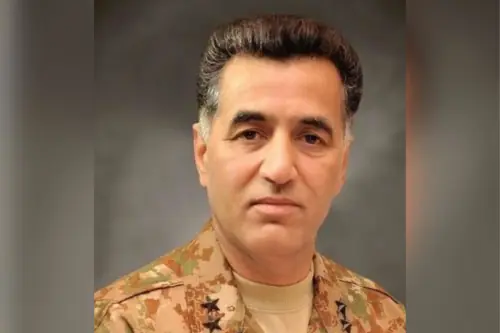
IT was, no doubt, a sobering reminder that even those who seem untouchable at the height of their power may one day be brought to book. The 14-year sentence handed to retired Lt-Gen Faiz Hameed by a military court this Thursday was, in many ways, both unprecedented and unexpected.
The high-profile case had shone a spotlight on deep-rooted tensions within Pakistan’s civil-military dynamics, Hameed’s alleged relationship with former prime minister Imran Khan and the PTI government, and his role in political engineering and corruption.
The trial began in August 2024 and lasted 15 months. For the longest time, it seemed that Faiz Hameed’s office would protect him; instead, the sentence has made history as the first time that a former ISI chief — considered the second-most powerful position in the military after the army chief under the old hierarchy — has been court-martialled and imprisoned by the military establishment.
Hameed’s conviction has been presented as an outcome of the Pakistan Army’s internal mechanisms for self-accountability. It should be commended for the example it attempts to set, but it would have been better if it had done so transparently.
Many critics have argued that this case was a political tool amid the ongoing instability, especially after it was tied to the May 9, 2023 riots that followed Mr Khan’s arrest. It has been implied by the establishment itself that Faiz Hameed may have played a role in precipitating the violence seen that day.
But that is just one of the many wrongs attributed to the former spy chief. Hameed is widely believed to have engineered the 2018 general elections to favour the PTI, and was afterwards seen as the architect of that government’s security and political strategies. He personally oversaw a campaign to control the national media, including multiple attempts to force this paper to capitulate.
This is not to mention the controversy that became central to his downfall: his alleged abuse of ISI authority to raid and extort a real estate project near Islamabad, in which he had allegedly demanded a stake. This is what prompted the initial probe against him.
When he was finally sentenced to a 14-year jail term this Thursday, it emerged that he had been convicted on four counts related to violating secrecy laws, engaging in political activities, misuse of authority, and causing harm to others. The press handout also notes that he could still face further sentencing for allegations of fomenting political unrest in collusion with politicians.
But the question remains: should this be considered precedent, or an exceptional case? The armed forces’ accountability mechanism must be praised for delivering strict justice; it is also hoped that it will be applied to all equally and that it will be applied consistently.
Published in Dawn, December 13th, 2025