Nepra calls time on costly power burdens

ISLAMABAD: The National Electric Power Regulatory Authority (Nepra) has sought an end to a series of unnecessary burdens in the consumer tariff, including the costs of high technical losses, taxes and surcharges on industrial consumers, and the impact of partial plant operations, in order to stimulate industrial output and make Pakistani products competitive.
In a note to the government as part of tariff determinations, Nepra’s Member Technical Rafique A. Shaikh said the continued underutilisation of thermal power plants was contributing to an increase in the per unit capacity purchase price (CPP), which required careful examination, particularly to determine whether the underutilisation stemmed from a genuine lack of demand in the system.
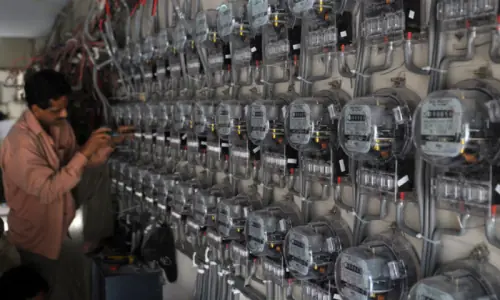
He suspected it was not the case as evidence indicated otherwise. “Seven out of 12 distribution companies (Discos) are still enforcing loadshedding exceeding 12 hours per day in certain regions. Such extensive loadshedding also penalises law-abiding consumers, undermines confidence in the grid, and pushing consumers to seek alternative sources of electricity. He said the loss based loadshedding was not yielding the intended results.
Moreover, the quality of service provided by Discos remains sub-optimal. Compounded by heavy taxes, levies, and surcharges, particularly the Debt Servicing Surcharge, these factors collectively inflate electricity costs for consumers. The result is a shifting of consumers towards decentralised or off-grid solutions, further weakening the demand for grid-based electricity. No wonder, on-grid solar installations have surpassed 6,000 MW, and total solar capacity, including both on-grid and off-grid systems, has reached about 13,000 MW.
Urges removal of surcharges, losses and partial-plant costs from consumer tariffs
Mr Shaikh said while this growth indicated a positive shift towards renewable energy, it also highlighted a structural problem: consumers are increasingly seeking energy alternatives due to high tariffs, unreliable service, and lack of trust in the conventional electricity grid.
The problem was exacerbated by factors like payments obligations for Part Load Adjustment Charges and Non-Project Missed Volume, higher T&D losses and short recoveries of the billed amount, high receivables, transmission constraints, plant operations in violation of economic merit order and underutilisation of assets across all power sector segments.
“These systemic inefficiencies contribute to rising electricity tariffs, creating a vicious cycle higher tariffs suppress demand, while low demand in turn increases tariffs”, the Nepra member technical said in the note that turned out to be his departing observation. He noted that the cumulative impact of these inefficiencies was not merely financial but economic and social as the national economy suffered due to an unreliable and poorly managed power system.
On the other hand, the failure to provide sustainable, affordable, and reliable electricity eroded consumer trust and confidence. Consequently, consumers – from low-consumption residential households to high-consumption industrial users — were compelled to explore independent energy solutions.
Suggesting rational tariff restructuring, the member noted that bulk and productive electricity demand was primarily driven by industrial consumers but Pakistan’s industrial growth remained unfortunately unsatisfactory specifically during past few years. “Despite a large domestic market, reliance on imported goods continues to rise because many locally manufactured products are costlier than imported alternatives”.
The Nepra member also pointed out that the high cost of electricity, combined with the continued practice of burdening industrial users to subsidise other consumer categories, was a major factor behind this uncompetitiveness, leading to industrial units and reduced productive activity. Therefore, he suggested elimination of cross-subsidization for industrial consumers. “The existing cross-subsidisation framework undermines industrial viability, suppresses growth, and ultimately contradicts broader national economic objectives,” he said.
Published in Dawn, December 12th, 2025