Controversial social media posts case: Imaan Mazari, Hadi Chatha submit list of defence witnesses
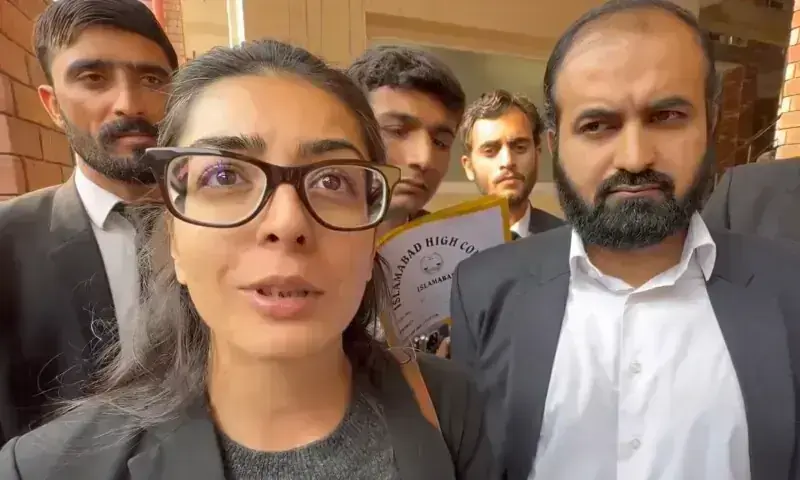

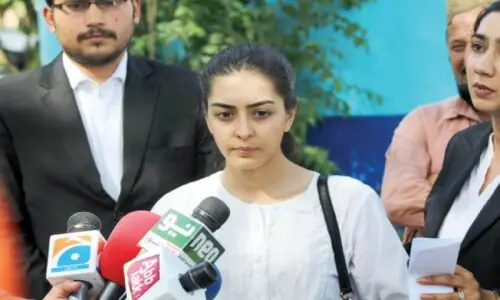
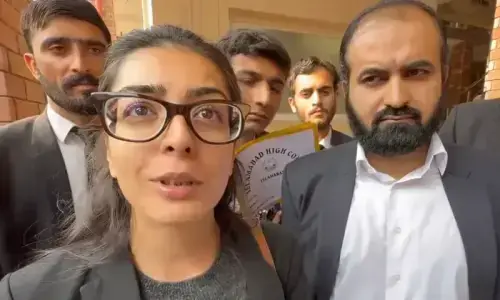
Lawyer Imaan Mazari and her spouse, Hadi Ali Chatha, on Friday handed over their list of defence witnesses as proceedings resumed in the controversial tweets case before Additional Sessions Judge Muhammad Afzal Majoka in the District and Sessions Courts, Islamabad.
At the start of the hearing, Chatha filed a fresh application requesting the court to allow both accused to record their statements under Section 342 of the Criminal Code of Procedure (CRPC) and to present witnesses in their defence. The court issued a notice to the prosecution on the application and briefly adjourned the hearing until 10am.
When proceedings resumed, Chatha argued the application himself, stating that the 342 statement submitted by the state counsel was not theirs and had been filed without the accused being informed.
He maintained that during cross-examination, the state counsel was given a questionnaire of 33 questions, which was later used to prepare a 342 reply that the defence does not accept.
Chatha also informed the court that a no-confidence application had been filed against state counsel Taimur Janjua and insisted that the accused must be allowed to submit their own statement.
He also read out the names of proposed defence witnesses, which include Ahmed Noorani’s mother, journalist Mudassar Naru’s mother, Sardar Akhtar Mengal, poet Ahmed Farhad, journalist Arifa Noor and others. Chatha added that the witnesses could appear physically or online, subject to the court’s approval.
Representatives of the bar, including District Bar President Naeem Gujjar, Raja Aleem Abbasi, and Riasat Ali Azad, supported Chatha’s plea, arguing that the right to a fair trial required the court to record the accused’s personal statements under Section 342.
They maintained that no case could proceed without ensuring that the accused were fully aware of the contents submitted on their behalf.
The prosecution began its arguments after the defence submissions, disputing the claim that no forensic examination had been conducted and asserting that the matter had already been examined. The prosecution also cited Supreme Court precedents to support its position.
During the proceedings, the state counsel submitted written closing arguments.
Judge Majoka briefly exited the courtroom, prompting slogans from some lawyers before he returned.
After arguments on various applications and the prosecution’s main submissions, the court adjourned the hearing until Monday, December 8.