SBP chief stresses investment in innovation
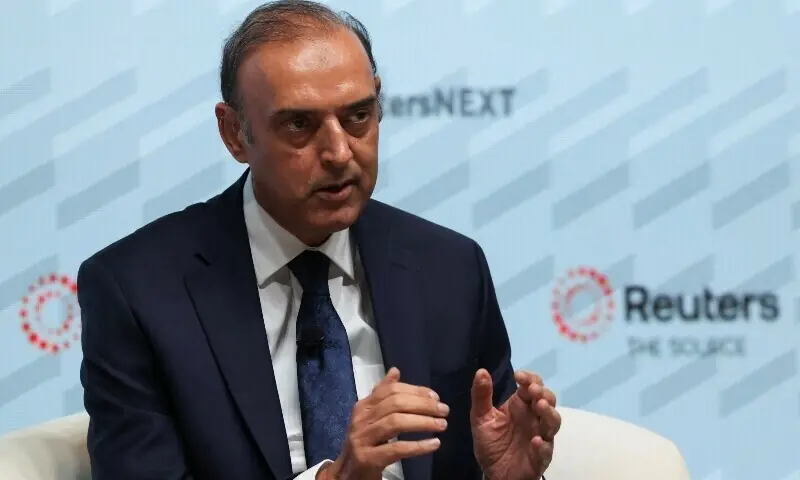

ISLAMABAD: State Bank of Pakistan (SBP) Governor Jameel Ahmad on Wednesday called upon businesses to explore new markets and invest in efficiency and innovation.
Addressing the two-day ‘Dialogue on the Economy,’ organised by the Pakistan Business Council (PBC), Mr Ahmad emphasised the need for the country to be a significant player in the modern global economy instead of operating on its margins.
He stressed that Pakistan also has a window of opportunity for stronger engagement from partners such as the US, China, and the Middle East.
He, however, also warned that the country’s current economic growth model cannot sustain a rapidly growing population of 250 million people.
Warns current growth model with a rising population not sustainable
Mr Ahmad emphasised the urgent need for Pakistan to transition from short-lived stabilisation efforts to a durable, sustainable and outward-looking growth model.
Speaking on the topic of the ‘State of Economy and Monetary Policy’, he emphasised the need to rethink the country’s economic model, saying that policymakers and businesses need to take a long-term view about policies, regulations and business strategies.
He noted that macroeconomic discipline is now underpinned by well-coordinated and forward-looking monetary and fiscal policies, avoiding the premature easing that historically undermined stability. The central bank’s enhanced forecasting capacity, he added, has allowed policymakers to anchor decisions in eight-quarter projections rather than short-term indicators.
“Inflation has not only fallen in line with our forecast but is expected to remain within the 5-7 per cent target band over the medium term,” he affirmed.
A major pillar of improved stability, Mr Ahmad stressed, is the qualitative strengthening of external buffers. Unlike past reliance on debt-driven inflows, recent reserve accumulation reflects strategic foreign exchange purchases and reduced forward liabilities.
He added that the public sector external debt has remained broadly stable since 2022, while the external debt-to-GDP ratio has declined from 31 to 26pc. During the same period, SBP’s FX reserves have risen from a critically low $2.9bn to roughly $14.5bn, a nearly fivefold increase.
“For policymakers, addressing structural issues through long-term reforms is imperative”, while businesses must shift their focus from looking inward to looking outward and compete on the global stage by producing goods that meet global demand and quality benchmarks. This will only happen if firms integrate into global value chains, modernise their production processes, and stop relying on substitutes for genuine competitiveness, Mr Ahmad said.
“We cannot achieve long-term sustainable economic growth if our private sector continues to look only at short-term profit margins at the cost of long-term stagnation and global irrelevance.” For our part, SBP and the government will continue to pursue structural reforms, strengthen fiscal and external buffers to improve resilience, and provide stability for our businesses to thrive, he assured.
“Our firms must align their workforce development with changing market needs. The private sector should also pursue partnerships and joint ventures abroad, technology transfer, and knowledge exchange to improve productivity and competitiveness at home,” he said.
The SBP governor further said that despite challenges and skepticism, the government has achieved the ambitious path of necessary fiscal consolidation over the past three consecutive years, even surpassing its primary surplus targets.
Published in Dawn, November 27th, 2025