South Africa terms G20 summit ‘win for multilateralism’


 0
0
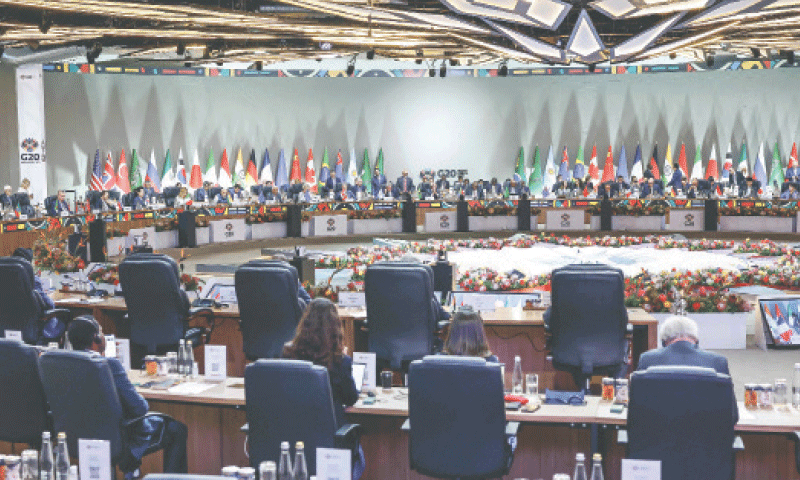

JOHANNESBURG: South Africa’s President Cyril Ramaphosa said on Sunday that the declaration from this weekend’s Group of 20 summit reflected a “renewed commitment to multilateral cooperation”, concluding a meeting that pitted him against his US counterpart.
Ramaphosa, host of the Johannesburg summit, pushed through the declaration addressing challenges like the climate crisis despite objections from the United States, which boycotted the event.
Addressing the closing ceremony, Ramaphosa said the declaration showed world leaders’ “shared goals outweigh our differences”.
US President Trump boycotted the Nov 22-23 summit on the grounds of allegations, which have been comprehensively falsified, that the host country’s Black majority government persecutes its white minority.
Despite US objections, declaration addresses climate crisis, debt relief and clean energy
Trump had also rejected South Africa’s agenda of helping developing nations transition to clean energy, cut their crippling debt costs and adapt to climate change-induced weather disasters.
But Ramaphosa secured consensus from the leaders present, aside from Argentina, which did not object to a declaration being made without it.
It was the first G20 summit in Africa and the joint declaration used the kind of language long disliked by the US administration.
The document stressed the seriousness of climate change and the need for adaptation, praised ambitious renewable energy targets and decried hefty debt service charges suffered by poor countries.
The summit came as tensions over Russia’s war in Ukraine fracture the transatlantic alliance, and after unavailing climate talks at COP30 in Brazil, in which oil-producing and high-consuming nations prevented mention of fossil fuels driving the crisis going in the final declaration.
Brazil’s President Luiz Inacio Lula da Silva said on Sunday that both the G20 and COP30 summits showed multilateralism was very much alive.
German Chancellor Friedrich Merz said the US was mentioned only in passing at the G20 summit and that it played only a minor role as new connections are being forged and the world reorganises itself. “It wasn’t a good decision for the American government to be absent. But that’s something the American government has to decide for itself,” he said.
“We are not experiencing a transition, but a rupture,” acknowledged Canadian Prime Minister Mark Carney before the session.
Published in Dawn, November 24th, 2025