Idea of judges’ en masse resignation ‘met with silence’
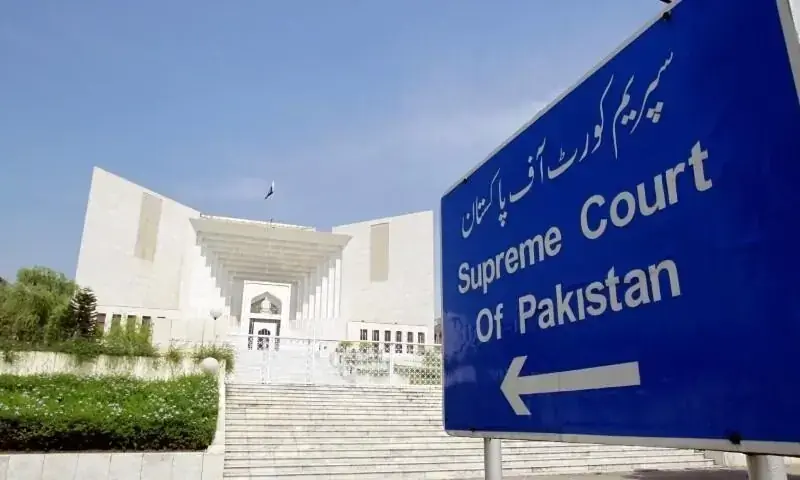

ISLAMABAD: A day after the 27th Amendment eroded its authority, over a dozen judges of the Supreme Court came together in the chief justice’s chambers to deliberate a future course of action.
But amid judges’ grumbling, a proposal to resign en masse to protest the amendment was met with mere silence.
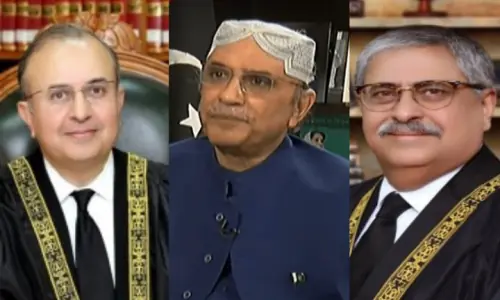
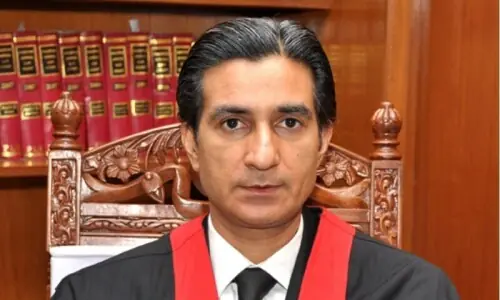
The Nov 14 full court meeting, chaired by Chief Justice of Pakistan Yahya Afridi, coincided with the elevation of four top court judges to the Federal Constitutional Court, and was convened a day after the resignation of two judges — Justice Mansoor Ali Shah and Justice Athar Minallah.
Prior to this, the CJP had also received letters from the two aforementioned judges, as well as Justice Salahuddin Panwhar, requesting a full court meeting for deliberation on the 27th Amendment to discharge their solemn duty to the Constitution.
Fly-on-the-wall account of judges’ conclave on judiciary’s response to 27th Amendment reveals misgivings over parliamentary powers
A source privy to proceedings said that the meeting was held in a tense atmosphere in the CJP’s chambers, as superior judges described the development as “a very sad day”.
The mood at the meeting became even more sombre when one of the judges questioned whether the Supreme Court was vested with any constitutional authority to restrain parliament from passing laws or constitutional amendments.
As judges debated the ramifications of the amendment, the CJP observed that instead of writing letters to him, the judges should have reached out to him directly, since his doors were always open, a source privy to the meeting revealed.
The full court meeting was attended by at least 13 judges: Justice Munib Akhtar and Justice Ayesha A. Malik did not attend the meeting, whereas Justice Musarrat Hilali was indisposed.
Four other judges, namely Aminuddin Khan, Hasan Azhar Rizvi, Aamer Farooq and Ali Baqar Najafi, had already been nominated as FCC judges.
‘Strong institutional response’
In the meeting, the judges noted with regret the resignation of their two colleagues and emphasised that the judiciary must come up with a strong institutional response.
When a few judges suggested sending a formal letter to the government, the CJP reminded them that judges should have approached him directly instead of writing letters.
As per the source, the CJP further said that the Supreme Court retained the power of judicial review to assess the constitutionality of legislation, but only after the passage of the law, not before it. Thus the court cannot stop parliament from making laws.
Upon insistence for a strong institutional response, one of the participants floated the idea that all of them, including the CJP, should tender their resignations if they wished to register a meaningful institutional protest beyond constitutional mechanisms, the source claimed.
The proposal, however, was met with silence, indicating a lack of agreement on part of the members attending the meeting. Subsequently, the meeting ended without a consensus.
Published in Dawn, November 20th, 2025