0
0

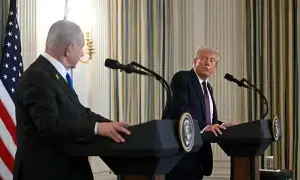
THE fragile calm that followed the recent US-Iran confrontation is being tested. Iran has made it clear that it does not view the ceasefire as a narrow arrangement confined to one battlefield. According to Tehran, Israeli attacks in Lebanon amount to violations of the ceasefire itself. Foreign Minister Abbas Araghchi has warned that a truce cannot be considered intact if military operations continue against Hezbollah. In effect, Iran has tied the fate of any wider understanding directly to events on Lebanon’s southern border. The warning comes amid contradictory signals. US President Donald Trump has claimed that he persuaded Israel and Hezbollah to halt hostilities and that Israeli forces would not advance on Beirut. Lebanese officials have also spoken of progress towards a mutual cessation of attacks. Yet such optimism sits uneasily with developments on the ground. Reports indicate that military operations, rocket fire and exchanges of attacks continued even after the latest declarations. Israeli Prime Minister Benjamin Netanyahu has spoken of a path towards peace while simultaneously maintaining that operations in southern Lebanon will continue. Hezbollah, for its part, has insisted on a comprehensive ceasefire across Lebanese territory and has pointed to ongoing military activity as proof that declarations alone are insufficient.
The result is a dangerous mismatch between diplomatic rhetoric and military reality. Washington appears eager to prevent the Lebanon front from derailing broader efforts to reduce tensions with Iran. Tehran, meanwhile, is signalling that the fronts cannot be separated. That position may be intended to shield Hezbollah, but it also reflects a political reality: no ceasefire can survive for long if one side believes fighting is merely continuing under another name. A single major strike in Beirut or a significant escalation along the Israel-Lebanon border could quickly undo the tentative progress made in recent days. Trump may insist that the situation is under control. The region’s recent history suggests that such assurances should be treated with caution.
Published in Dawn, June 3rd, 2026