0
0

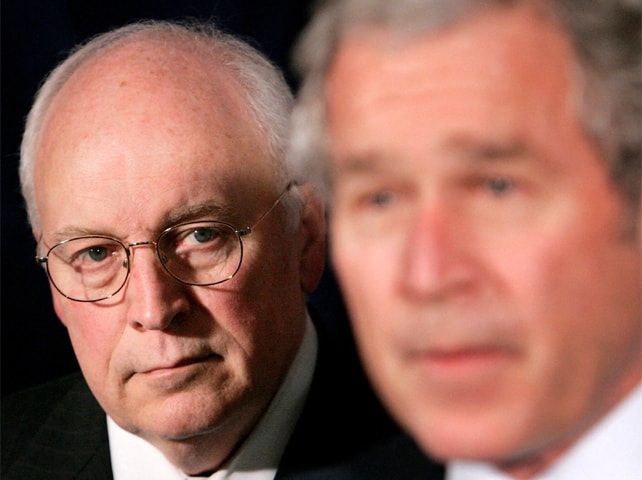
WASHINGTON: Dick Cheney, a driving force behind the US invasion of Iraq in 2003 and considered by presidential historians as one of the most powerful vice presidents in US history, died at age 84 from complications of pneumonia and cardiac and vascular disease, his family said on Tuesday.
The Republican — a former Wyoming congressman and secretary of defence — was already a major Washington player when then-Texas governor George W. Bush chose him to be his running mate in the 2000 presidential race that Bush went on to win.
As vice president from 2001 to 2009, Cheney fought vigorously for an expansion of the power of the presidency, having felt that it had been eroding since the Watergate scandal that drove his one-time boss Richard Nixon from office. He also expanded the clout of the vice president’s office by putting together a national security team that often served as a power center of its own within the administration.
Cheney was a strong advocate for the 2003 invasion of Iraq and was among the most outspoken of Bush administration officials warning of the danger from Iraq’s alleged stockpile of weapons of mass destruction. No such weapons were found.
Republican served ‘father & son’ Bush administrations; came under fire over ties to Halliburton
He clashed with several top Bush aides, including secretaries of state Colin Powell and Condoleezza Rice, and defended “enhanced” interrogation techniques of terrorism suspects that included waterboarding and sleep deprivation. Others, including the US Senate Select Committee on Intelligence and the UN special rapporteur on counterterrorism and human rights, called these techniques “torture”.
Cheney was troubled much of his life by heart problems, suffering the first of a number of heart attacks at age 37. He had a heart transplant in 2012.
Taking on Iraq
Cheney and Defence Secretary Donald Rumsfeld, who had been colleagues in the Nixon White House, were key voices pushing for the March 2003 invasion of Iraq.
In the run-up to the war, Cheney suggested there might be links between Iraq and al Qaeda and the September 11, 2001 attacks on the United States. A commission on the 9/11 attacks later discredited this theory.
Cheney predicted US forces would be “greeted as liberators” in Iraq and that the troop deployment — which would last around a decade — would “go relatively quickly ... weeks rather than months.”
Although no weapons of mass destruction were found, Cheney in later years insisted that the invasion was the right decision based on the intelligence at the time and the removal of Iraqi President Saddam Hussein from power.
More than a decade earlier, as defence secretary under President George H.W. Bush, Cheney had directed the US military operation to expel an Iraqi occupation army from Kuwait in the first Gulf War.
He urged Bush senior to take an uncompromising line against Iraq after Saddam Hussein sent his troops to occupy Kuwait in August 1990. But at that point Cheney did not support an invasion of Iraq, saying the United States would have to act alone and that the situation would become a quagmire.
Because of Cheney’s long ties to the Bush family and experience in government, George W. Bush chose him to head his vice presidential search in 2000. Bush then decided the man doing the search was the best candidate for the job.
Upon his re-entry into politics, Cheney received a $35 million retirement package from oil services firm Halliburton, which he had run from 1995 to 2000.
Halliburton became a leading government contractor during the Iraq war. Cheney’s oil industry links were a subject of frequent criticism by opponents of the war.
Richard Bruce Cheney was born in Lincoln, Nebraska, to Marjorie Lorraine (ne Dickey) and Richard Herbert Cheney on January 30, 1941, the day then-President Franklin Roosevelt turned 59. His father was a federal worker with the Soil Conservation Service.
Published in Dawn, November 5th, 2025