Elon Musk's AI tool Grok was used in strikes against Iran, US govt says in legal briefing
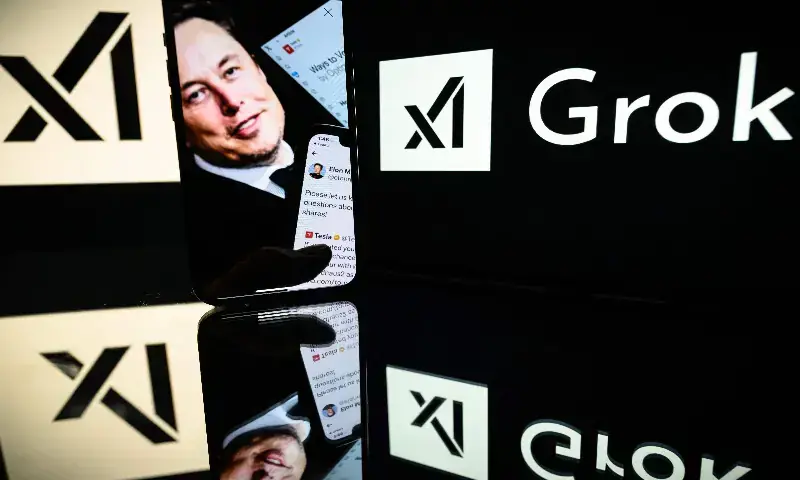
Elon Musk’s artificial intelligence tool Grok was used in strikes against Iran, the United States government revealed in a legal briefing seen Tuesday by AFP.
The June 15 brief defends the gas turbines used by a giant data centre belonging to the trillionaire’s company xAI, which are the target of an environmental lawsuit.
In the brief, the US Department of Justice argued that the lawsuit “threatens American national, economic, and energy security by seeking to shut off the power supply for artificial intelligence innovation that supports the Department of War’s military operations”.
To support the argument, federal prosecutors presented testimony from Pentagon AI chief Cameron Stanley in which he states, under oath, that Grok is already in use within Project Maven, the US military’s AI-assisted targeting programme that was initially powered by Anthropic’s Claude model.
The project’s Maven Smart Systems (MSS) “enabled US forces to deploy over 2,000 munitions to 2,000 distinct targets within 96 hours during Operation Epic Fury,” Stanley’s statement said.
Stanley praised Musk’s technology and “the greatly increased operational efficiency made possible by the Grok Gov Model”.
The NAACP, a civil rights organisation defending Black Americans’ rights, is suing xAI and accusing it of operating dozens of turbines without permits in violation of the Clean Air Act.
The rights group says they pollute majority Black neighborhoods, but xAI says the turbines are temporary and mobile, and therefore not subject to regulation.
At the end of February, the government terminated its contracts with Anthropic after it refused to allow its tools to be used for fully automated strikes or the mass surveillance of Americans.
The Pentagon then turned to Anthropic’s competitors, like Google, OpenAI and xAI, to continue its pursuit of AI.
At Google, more than 600 employees demanded the company not provide AI to the military for classified operations. Others have raised broad concerns about AI’s threats.
The US military’s transition to AI is taking time, and in March the government had to acknowledge that Claude was still being used for the war in Iran.
A close ally of President Donald Trump, Musk folded xAI into his space exploration company SpaceX in February, which carried out the largest IPO in history on June 12.