Only two weeks of water left in Tehran’s main reservoir: official


 1
1
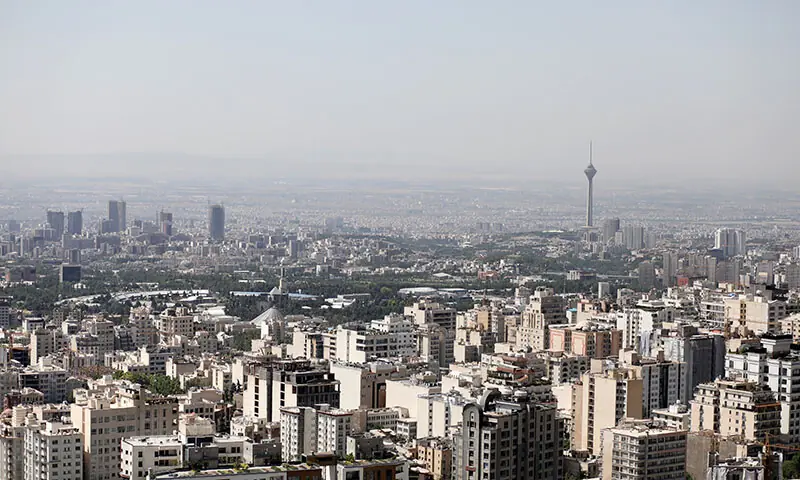

Tehran’s main source of drinking water is at risk of running dry within two weeks, state media warned on Sunday, owing to a historic drought.
The Amir Kabir dam, one of five which provide drinking water for the capital, “holds just 14 million cubic metres of water, which is 8 per cent of its capacity,” the director of the capital’s water company, Behzad Parsa, was quoted as saying by the IRNA news agency.
At that level, it can only continue to supply Tehran with water “for two weeks”, he said.
The megacity of more than 10 million people is nestled against the southern slopes of the often snow-capped Alborz mountains, which soar as high as 5,600 metres and whose rivers feed multiple reservoirs.
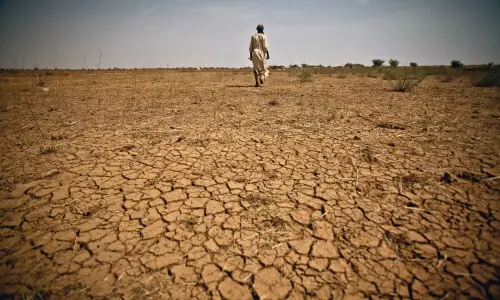
But the country is in the midst of its worst drought in decades. The level of rainfall in Tehran province was “nearly without precedent for a century,” a local official declared last month.
A year ago, the Amir Kabir dam held back 86 million cubic metres of water, Parsa said, but there had been a “100pc drop in precipitation” in the Tehran region.
Parsa did not provide details on the status of the other reservoirs in the system. According to Iranian media, the population of Tehran consumes around three million cubic metres of water each day.
As a water-saving measure, supplies have reportedly been cut off to several neighbourhoods in recent days, while outages were frequent this summer. In July and August, two public holidays were declared to save water and energy, with power cuts an almost daily occurrence amid a heatwave.
“The water crisis is more serious than what is being discussed today,” Iranian President Masoud Pezeshkian warned at the time.