Camels replace cows as Kenya battles drought


 0
0
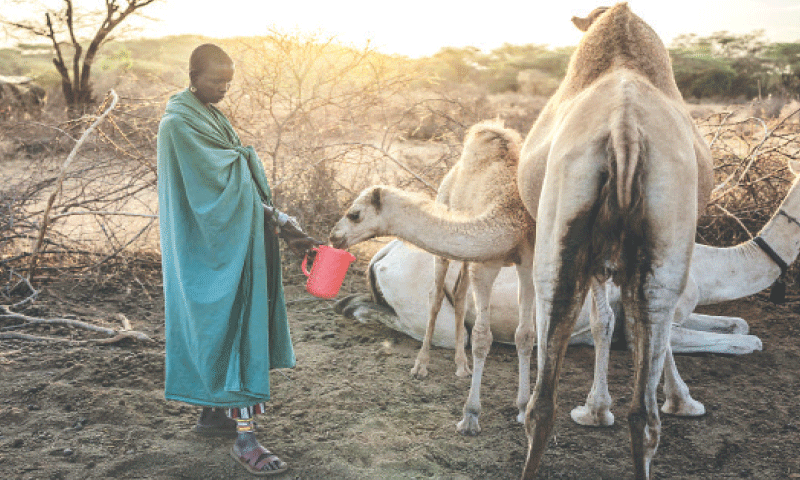

SAMBURU: Sitting on the edge of a nearby well, Chapan Lolpusike recounted how his cows and oxen “all died” following the worst drought in four decades, oblivious to the dry riverbed in northern Kenya, where it hasn’t rained since April, caused by a succession of poor rainfall in 2021 and 2022.
After that, the herder made a sweeping change. “We no longer have cattle at home. We only raise camels,” said Lolpusike, a member of the semi-nomadic Samburu community.
Camels can graze on dry grasses, go more than a week without water, and produce up to six times more milk than cattle — making them an increasingly necessary option in northern Kenya, an area particularly vulnerable to climate change.
Samburu County officials launched a camel program in 2015, following several droughts that had killed off at least 70 percent of the cattle in Kenya’s arid and semi-arid regions.
Around 5,000 Somali camels — a larger and more productive breed than the native herd -- have since been distributed, including 1,000 in the last year.
The goal is for every family in the county to have their own, said village administrator James Lolpusike.
“If the drought persists, the cattle will not be anywhere anymore,” he said.
Camel herds are at high risk of disease that could lead to losses.
But there are clear, positive changes as they become a regular sight in the region, including healthier children, said the village administrator.
Published in Dawn, November 1st, 2025