CONTROLLING or managing the narrative originating from the pulpit has been a challenge for the state for several decades. Quite often, radical preachers have misused the mosque and madressah to spread hate speech, sectarian views and mount challenges to the state’s writ. Pakistan’s history is replete with examples where extremist clergymen have taken on the state, with the Lal Masjid fiasco being perhaps the gravest episode of its kind.
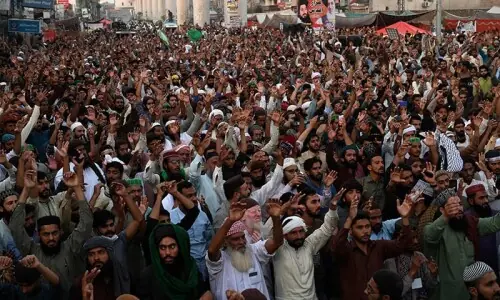
In recent days, the TLP’s problematic and violent outbursts invited a crackdown from the state, leading to the party being banned. Yet questions had been swirling about the 400-plus mosques and madressahs run by the TLP in Punjab. Initially, it was announced that the Auqaf department would run the institutions. But after pushback from senior Barelvi clerics — who feared the state may grant control of the mosques to other sects — the Punjab government has decided to hand over the administration of the religious places to ‘moderate’ clerics led by Mufti Muneeb ur Rehman. The Punjab administration has also announced monthly stipends for imams of the province’s over 65,000 mosques.
These moves raise questions about how much the state should exert control over religious institutions, and where the line should be drawn to preserve individual religious freedoms. In other Muslim states, such as Saudi Arabia, Iran and Turkiye, the state is heavily involved in the appointment and oversight of imams, particularly Friday prayer leaders, while the contents of Friday sermons are also vetted.
Can similar models be followed in Pakistan? In this country, attempts have also been made to regulate mosques. For example, laws were passed in the 1960s to ensure mosque loudspeakers were only used for azan and Friday sermons. In more recent decades, especially after the rise of religiously inspired militancy in the country, the state resolved through NAP to register and regulate madressahs. Yet problems have persisted, as the TLP phenomenon and the activities of sectarian groups have shown.
It is clear that state oversight is needed of religious institutions, but with some guardrails. For example, there must be clearly defined areas which necessitate state intervention and action against preachers violating SOPs. This includes hate speech, particularly language demonising any religion, sect, or community, as well as calls to violence and insurrection against the state. In this regard, the state has often failed to act against clergymen who have promoted and incited violence, only taking action after the damage is done.
Beyond these guidelines, the state should not be regulating religious rituals, or penalising imams who stray from the official line about any particular subject, unless they promote violence or hate speech. A balance needs to be struck between maintaining order and cracking down on hate speech, and respecting individual freedoms.
Published in Dawn, October 31st, 2025