Decision to slash KE’s base tariff reflects collective wisdom, says Nepra
ISLAMABAD: The National Electric Power Regulatory Authority (Nepra) on Wednesday evaded a direct comment on its recent decision of reducing the K-Electric’s multiyear tariff by about Rs7 per unit.
During a public hearing on Central Power Purchasing Agency’s request for negative fuel cost adjustment (FCA) for electricity consumed in September, a questioner wondered if the regulator had used collective wisdom in reducing KE’s base tariff by almost 20 per cent that would cut government subsidies by about Rs7 per unit and how these calculations were made in May and then in October.
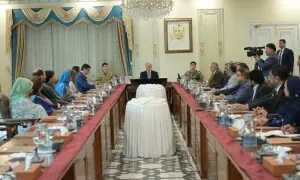
Nepra’s Member (Legal) Amina Ahmed, who presided over the public hearing, said the signatures on the Nepra’s determination meant collective wisdom was involved and detailed explanations for revisions in various tariff parameters had been detailed in the judgement.
She said the regulator did not calculate a subsidy element as it was not Nepra’s job.
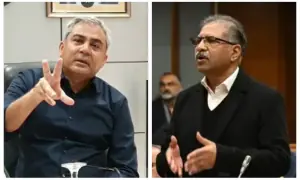
Earlier, CPPA’s Chief Executive Officer Rehan Akhtar told the public hearing that the actual fuel cost in September was lower than already charged to consumers and hence a refund of 37-paisa per unit was required for consumers across the country.
He said the consumers had already paid a positive FCA of eight-paisa per unit in October that now stood expired. Therefore, net relief to consumers would work out at 45-paisa per unit upon regulatory approval.
He told the hearing that consumption in September 2025 was around 24pc higher than same month of last year owing to prolonged summer, but was 5pc lower than August and 3pc lower that the estimates made for reference September tariff.
Industrial consumption, he said, had also dropped due to macroeconomic factors, higher electricity costs and solarisation.
He explained that hydropower generation was better than estimated but forced outages at few thermal and nuclear power plants and lower availability of local gas at Uch, Balochistan and LNG entailed induction of expensive sources. Otherwise, FCA would have been larger, he said.
Published in Dawn, October 30th, 2025