Afghan man on trial in Germany over deadly knife attack on toddlers
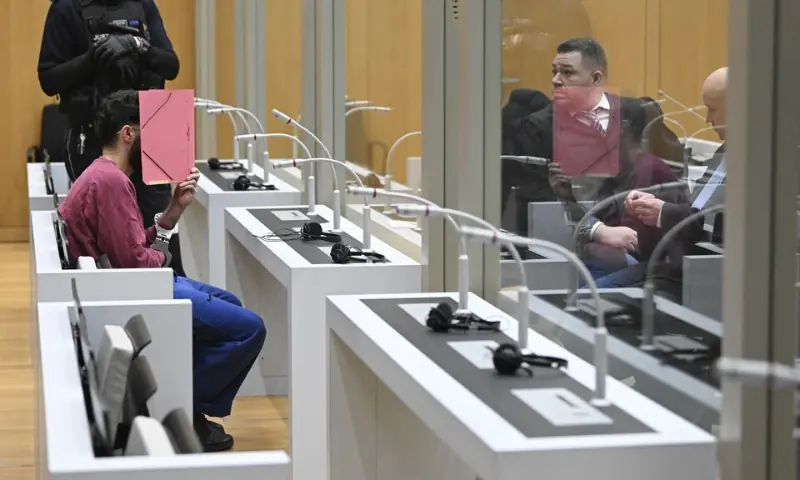
An Afghan man accused of a deadly knife attack on a group of toddlers in Germany went on trial on Thursday, nine months after an incident that inflamed a heated pre-election debate on immigration.
Germany was shocked by the stabbing spree that killed a two-year-old boy and a 41-year-old man who tried to protect the children and left three others wounded in the southern city of Aschaffenburg.
Five toddlers from a kindergarten class were in a public park, accompanied by two teachers, when the assailant attacked them with a kitchen knife.
The suspect arrested at the scene of the January 22 attack has been only partially named, in line with usual practice by the German judiciary, as 28-year-old Enamullah O.
He has a long history of mental illness, and prosecutors said an expert assessment concluded his psychiatric state meant he was not criminally responsible.
The public prosecutor’s office has previously said there was no indication the suspect acted out of extremist or terrorist motivation, and they were seeking to have him permanently confined to a psychiatric facility.
The trial is expected to stretch over several days of proceedings in October.
The suspected attacker injured a two-year-old Syrian girl, one of the teachers, as well as a 72-year-old man who had also tried to protect the children.
He was arrested shortly afterwards, and it soon emerged that the authorities had tried and failed in 2023 to deport him to Bulgaria — the first EU country he had arrived in.
In August 2024, he allegedly threatened a fellow resident at an accommodation for asylum seekers in the nearby town of Alzenau with a butcher’s knife and caused her minor injuries.
The Aschaffenburg stabbings, which followed a string of other bloody attacks in Germany, provoked intense political reactions.
Friedrich Merz, the leader of the centre-right Christian Democrats who went on to become chancellor, promised a “fundamental” overhaul of asylum rules and strict border controls “from day one” if elected.
About a week later, Merz, then the opposition leader, relied on support from the far-right Alternative for Germany (AfD) to pass a non-binding resolution through parliament demanding stricter immigration and refugee policies.
Merz’s decision to rely on far-right support broke a longstanding taboo in post-World War II German politics, prompting fierce criticism and mass street protests.