Ancients used rock art to mark water sources, researchers say


 0
0
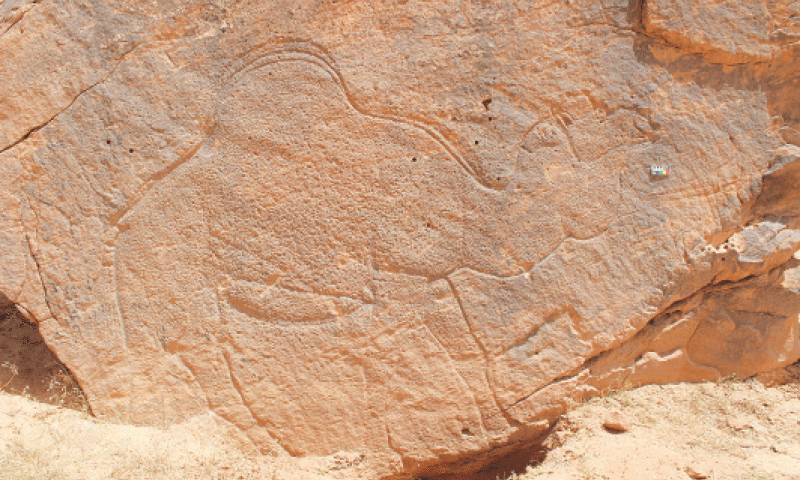
ABOUT 12,000 years ago, hunter-gatherers who inhabited a swathe of Arabian desert carved life-sized images of camels and other animals on sandstone cliffs and boulders, using rock art to mark the location of water sources in an illustration of how ancient people tackled some of Earth’s most inhospitable environs.
Researchers said the monumental rock art was found south of the Nefud desert of northern Saudi Arabia at locales spanning a distance of about 20 miles in mountainous terrain.
About 60 rock art panels bear more than 130 images of animals — primarily camels, but also ibex, gazelles, wild donkeys and an aurochs, a bovine thought to be the wild ancestor of modern domestic cattle. Some of the camel engravings were more than 7 feet (2 metres) tall and 8-1/2 feet (2.6 metres) long.
While many of the images were situated on boulders within easy reach of the ground, some were crafted on towering cliffs including one that was about 128 feet (39 metres) off the ground and was engraved with 19 camels and three donkeys.
“The engravers would have had to stand on a ledge directly in front of the cliff,” said archaeologist and rock art researcher Maria Guagnin of the University of Sydney and the Max Planck Institute of Geoanthropology in Germany, lead author of the study published in the journal Nature Communications.
“It would have been extremely dangerous to make these engravings as the ledge is very narrow and slopes downwards. Standing on this ledge, the engravers would also not have been able to see the whole image they were creating. But they had the skill to still produce a naturalistic representation,” Guagnin added.
The researchers said the rock art marked the location of transient water sources on the harsh desert landscape. “These ancient communities survived in the desert by moving between seasonal lakes, and they marked these water sources, and the paths leading to them, with monumental rock art,” Guagnin said.
Published in Dawn, October 1st, 2025