• Govt faces tough task as it seeks flood-related relaxations
• Fund questions use of emergency funds, delays in governance reforms
• $1bn tranche hinges on progress in review talks
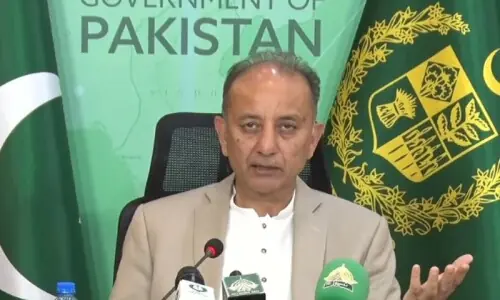
ISLAMABAD: An International Monetary Fund (IMF) review mission began its work simultaneously in Karachi and Islamabad on Thursday, holding discussions with authorities on mixed programme performance without the customary opening engagement with Minister for Finance and Revenue Muhammad Aurangzeb, who is currently on a visit to the United States.
Sources said the introductory meeting with Mr Aurangzeb, initially scheduled for Sept 25, has now been moved to Monday (Sept 29) in his absence. In the meantime, two IMF teams — one dealing with monetary policy and the other with fiscal policy — are engaged with the State Bank of Pakistan and federal government entities.
The mission is expected to stay for about two weeks and will also hold forward-looking discussions, pressing the authorities to expedite implementation of end-December 2025 targets.
According to the sources, the government has already used one-third of the Rs390 billion budgetary allocation for natural disasters and emergencies, clearing Rs130bn in past dues owed to commercial banks for incentives and fees linked to remittances sent through formal channels.
The government will now have to justify these payments from the emergency fund at a time when it is also seeking relaxations from the IMF on account of flood damages. Moreover, no allocation has been made in the current budget for such incentives, though an estimated Rs100bn would be required.
The IMF mission also expects clarity on the scale of recent flood damages during its stay, but the government has yet to finalise estimates. Authorities are hoping the Fund will allow relaxations in primary budget surplus and fiscal deficit targets to create space for flood-related expenditure without resorting to new taxes or cuts in development spending.
The government has missed several key end-June 2025 targets, including FBR’s revenue collection, retail taxation and provincial cash surpluses, and could face difficulties on these counts.
At the same time, the governance and corruption diagnostic report — pending with the authorities for review and publication — has still not been released, leaving the associated governance action plan in limbo. Progress on state-owned enterprises (SOEs) governance reforms has also stalled, despite commitments made with the IMF.
Although provincial legislatures successfully enacted agriculture income tax laws in time, their actual implementation and collection from September-October remains uncertain, especially given the flood situation in Punjab and Sindh. This uncertainty also clouds the government’s ability to assess and deliver the required support for flood-affected people, sectors and facilities.
On the positive side, Pakistan has almost met all quantitative performance criteria for end-June 2025, but it continues to lag behind on indicative targets and structural benchmarks. These gaps could affect the pace of implementation in the months ahead.
Since the $7bn Extended Fund Facility and $1.4bn climate-linked Resilience & Sustainability Facility are reviewed twice a year, both sides will have to reach an agreement on past performance as well as future commitments.
If the review is successfully concluded, Pakistan will qualify for disbursement of about $1bn (equivalent to 760 million IMF special drawing rights) by the end of next month.
Published in Dawn, September 26th, 2025