How did an Indian zoo get the world’s most endangered great ape?


 0
0
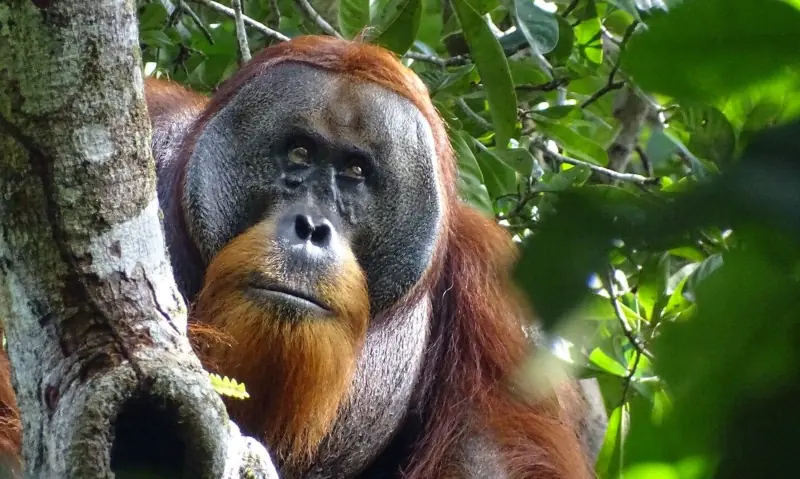
BANGKOK: Tapanuli orangutans are the world’s most endangered great ape. Fewer than 800 remain, all previously thought to be in their native Indonesia. But now an Indian zoo says it has one.
An Indian court cleared the 3,500-acre wildlife facility in Gujarat, known as Vantara, on Monday of allegations including unlawful acquisition of animals and financial wrongdoing.
But the decision is unlikely to quiet questions about how Vantara, which describes itself as a wildlife rehabilitation and conservation centre, has stocked its enclosures.
Vantara, run by Anant Ambani, the son of Asia’s richest man, says it houses 150,000 animals of 2,000 species, far exceeding populations at well-known zoos in New York, London or Berlin.
Several experts declined to speak on record, citing Vantara’s previous legal actions against critics.
They called Vantara’s collection unprecedented.
“We’ve never seen anything on this scale,” said one conservation expert from a wildlife protection group.
“It’s hoovering up animals from all over the world.” Some of those acquisitions are more noteworthy than others, such as the single tapanuli that arrived in Vantara between last year or the year before.
Only officially described in 2017, tapanulis are incredibly rare, said Serge Wich, an orangutan specialist at Liverpool John Moores University.
They are confined to a small range in Indonesia and are in “dire straits” because of threats like mining and deforestation, he added.
Surprised and shocked
Trade in the world’s most endangered species is prohibited by the Convention on International Trade in Endangered Species of Wild Fauna and Flora (CITES).
But there are exceptions, including for “captive-bred” animals _ individuals born in captivity to captive parents.
There is only one CITES record of a tapanuli orangutan ever being transferred internationally.
It left Indonesia in 2023, bound for the United Arab Emirates, where Vantara says its tapanuli came from.
The transfer record describes the animal as “captive-bred”.
However, multiple experts said that description was implausible.
“There are no captive breeding programmes for orangutans in Indonesia,” said Panut Hadisiswoyo, founder and chairman of the Orangutan Information Centre in Indonesia.
Only a handful are known to be in captivity at all, at rehabilitation facilities in Indonesia, he added.
A conservationist for more than two decades, Panut said he was “surprised and shocked” to learn about Vantara’s tapanuli orangutan.
“We do everything to protect them,” he said. “So it’s really, really distressing information.”
There is no information on where in Indonesia the animal originated.
Experts said it was possible the orangutan is not a tapanuli at all. They look so similar to Bornean and Sumatran orangutans that DNA testing would be needed for confirmation.
It could also be a mix of tapanuli and another species, perhaps discovered by a zoo in its collection _ although experts questioned why a facility would hand off such a rare animal.
But if the animal is a tapanuli, “it’s almost inevitable that it would have to be illegal”, said orangutan conservation expert Erik Meijaard. “It would be super sad.”
Published in Dawn, September 20th, 2025