WITH floodwaters surging yet again through Punjab, the country is faced with an all too familiar crisis — rehabilitation.
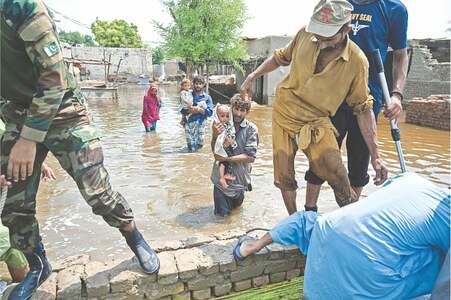
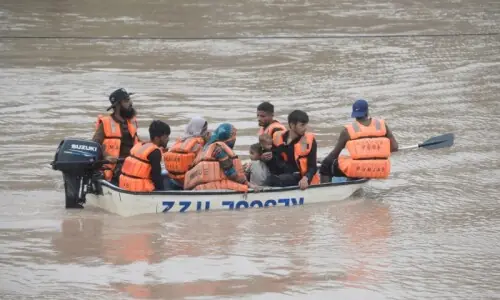
Officials report nearly 300,000 displaced from the province alone and more than a million affected as the Ravi, Sutlej and Chenab overflowed their banks. This latest emergency comes while the country is still reeling from lethal flash floods in KP and as a 7-km-long lake formed after a landslide blocked a river in Gilgit-Baltistan, forcing precautionary evacuations. It has been a season of peril, from the mountains to the plains.
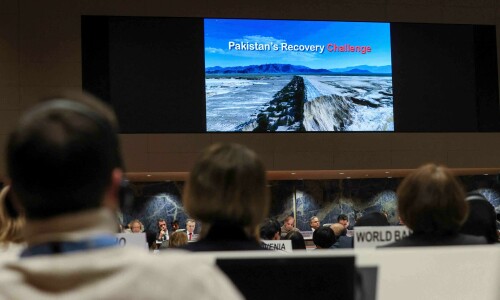
Following the cataclysmic floods of 2022 that put a third of the country under water, affected 33m and displaced nearly 8m, the government and international donors produced a Post-Disaster Needs Assessment and launched the Resilient Recovery, Rehabilitation and Reconstruction Framework (4RF). Donors pledged over $9bn at Geneva to ‘build back better’ in housing, livelihoods and public services. The commitments set a bar we have yet to meet.
Progress has been slow and uneven. Rights monitors have flagged gaps in beneficiary lists and basic amenities in government housing schemes. Even this April, tens of thousands of schools in Sindh hit by the 2022 floods were struggling to function. Three years later, the response still leans heavily on evacuation, camps and compensation. While such measures save lives, they do not necessarily restore them.
Punjab’s set-up of hundreds of relief and medical sites demonstrates mobilisation capacity, yet there is still no published nationwide rehabilitation blueprint for this year comparable to 4RF: no clear calendar for resilient housing grants, no transparent, countrywide registry of climate-displaced households, no public dashboard tracking delivery by district.
What must be done is no rocket science. The state must treat displacement as a policy priority, not an after-event improvisation. It must legislate a climate-displacement framework that guarantees registration, interim shelter, core-housing grants tied to resilient designs, and portable access to health, education and social protection (through BISP) for uprooted families. Second, set aside and fast-track rehabilitation finance — including Geneva pledges — with independent audits and open data, so money reaches the last mile.
Third, rebuild in ways that can withstand climate risks: multi-purpose elevated shelters across riverine belts; enforceable zoning to keep construction off floodplains; city drainage upgrades; and accelerated glacial-lake early-warning and downstream evacuation routes in the north. Finally, make communities co-designers: women, sharecroppers and landless labourers must be at the centre of relocation and livelihood plans.
The latest devastation in Punjab should not become another chapter in our cycle of disaster, ‘relief’ and neglect. The state has planned before. It must deliver now so that those repeatedly uprooted by a changing climate can rebuild lives rather than wait for the next siren.
Published in Dawn, August 30th, 2025