World bank approves $47.9m grant to improve Punjab primary education, enrolment


 0
0
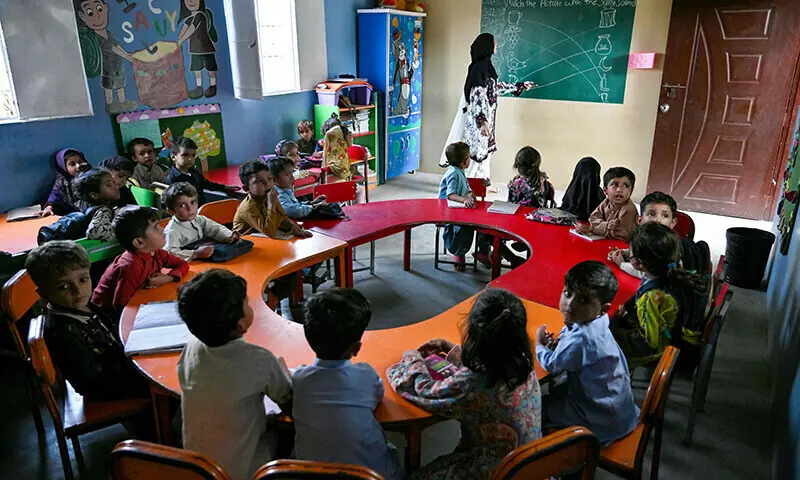

The World Bank on Monday approved a $47.9 million grant to improve primary education in Punjab, saying the project will expand early childhood schooling, re-enrol out-of-school children and strengthen teacher support.
The move came over a month after the Higher Education Commission (HEC) and the World Bank teams conducted the 12th and final mission to review and evaluate progress against the targets set under the Higher Education Development in Pakistan (HEDP) project.
“The World Bank has approved a US$47.9 million grant, funded by the Global Partnership for Education Fund, to help improve girls’ and boys’ participation at pre-primary and primary levels in Pakistan’s Punjab province,” the organisation said in a press release dated August 23, shared on social media today.
According to the press release, the GRADES-Balochistan project will also improve the responsiveness of the education sector to climate change and emergencies.
Among the four million children that the project aims to benefit are 80,000 out-of-school children, over 3m in School Education Department (SED) schools, 850,000 in the non-formal sector, and 140,000 differently-abled children in Special Education Department (SpED) schools, it said.
The World Bank added that over 100,000 teachers and school leaders, as well as parents and community members, would benefit through professional development and awareness campaigns.
“The project is aligned with the Government of Punjab’s broader education reform agenda, which seeks to create a more effective, accountable, and inclusive education system,” said Izza Farrakh, World Bank Task Team Leader for the project, according to the release. “It will do so by supporting the government’s efforts to improve governance, management, and capacity in the education sector.“
Bolormaa Amgaabazar, World Bank Country Director for Pakistan, called the project a “crucial step towards addressing learning poverty and ensuring equitable access to quality education across Punjab”.
The statement added that the project targeted those populations that were most vulnerable, in line with the group’s goals of eliminating extreme poverty and the promotion of “shared prosperity” and its Country Partnership Framework (CPF) with Pakistan.
It highlighted that Pakistan had been a member of the World Bank since 1950 and that since this time, the World Bank had provided over $48.3bn to the country in assistance.
The International Finance Corporation (IFC), a member of the World Bank Group, had invested approximately $13bn in Pakistan since 1956, it added. The projects it funded supported renewable energy, financial inclusion, infrastructure, healthcare and agribusiness, among others.
The current portfolio has 54 projects and a total commitment of $15.7bn.
In June, the World Bank had approved $100m for the “Getting Results: Access and Delivery of Quality Education Services in Balochistan” (GRADES-Balochistan) project, which aimed to benefit around 250,000 students by increasing enrolment and improving literacy.