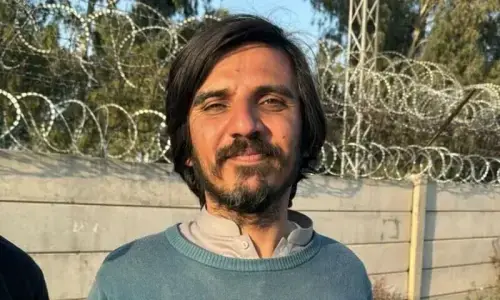
DISASTER struck again, this time in Gilgit-Baltistan’s Ghizer Valley. A glacial lake outburst flood devastated villages and farmland, destroying homes, schools and bridges. Over 300 households were affected, but thanks to the quick thinking of a shepherd, Wasiyat Khan, who raised the alarm in time, lives were saved. His heroic intervention, along with the efforts of local volunteers, ensured residents could evacuate before the waters came crashing down. This story also lays bare a sad truth: time and again, it is ordinary citizens — not the state — who shoulder the burden of rescue and survival. Earlier this month, residents of Danyor, GB, paid with their lives while attempting to restore a water pipeline that the government had repeatedly promised to fix. In Karachi too, during the recent heavy rains, stranded citizens had to rely on one another while official rescue efforts appeared woefully absent. In Ghizer, even as the army was called in for helicopter rescues, villagers had already completed the task themselves, proving how communities are forced into self-reliance in moments of peril.
Should citizens, then, lose faith in the state’s ability to protect them? It is a dangerous question, but one the government cannot afford to ignore. Communities in climate-vulnerable regions are showing remarkable resilience, but it is unconscionable that they are left to fend for themselves against forces of nature that grow more destructive by the year. Nowhere is this clearer than in the increasing frequency of GLOFs, which triggered by rapid glacier melt and rising temperatures, are occurring with alarming regularity across GB. Without effective early-warning systems, disaster-resilient infrastructure and pre-planned evacuation mechanisms, each burst becomes a roll of the dice with people’s lives. The state must prioritise investment in real-time monitoring of glaciers, community-based rescue training, reinforced roads and bridges and reliable water and power systems that can withstand floods. These are not luxuries but necessities in a climate-stressed Pakistan. The costs of such preparedness may be high, but the costs of inaction are far greater and already visible. Heroism should not be the only shield citizens have against tragedy. Pakistan cannot continue to outsource disaster management to shepherds, volunteers and grieving families. The state must honour its duty: to protect its citizens through foresight, investment and action. Anything less is abandonment.
Published in Dawn, August 25th, 2025