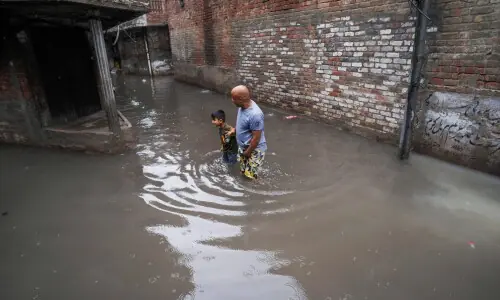
PRIME MINISTER Shehbaz Sharif’s lament in Buner on Wednesday — that Pakistan did not heed any lessons from the 2022 floods — is as apt as it is tragic. His words echo the frustration of a people once again mourning hundreds of lives lost and thousands displaced by rains that have battered KP, Gilgit-Baltistan, Karachi and beyond. However, while Mr Sharif was right to highlight the folly of unchecked construction on floodplains and riverbanks, describing it as a “human blunder”, the crisis runs much deeper. Climate change has been amplifying the destruction that has come from decades of poor governance.Pakistan, unfortunately, sits on the front lines of climate vulnerability. Glaciers in the north are melting in fragile valleys, while unpredictable monsoons unleash heavy rains on already soaked plains. Deforestation, particularly in KP, has stripped hillsides of the natural barriers that once slowed floods and prevented landslides. Trees that could have absorbed water and anchored soil have been felled for timber or cleared for unregulated development. The result is not only devastation in rural areas but also risks for cities, where clogged drains and crumbling infrastructure leave millions exposed to urban flooding.
The government must step up to the task. These are not seasonal aberrations. They are our permanent new reality. We must invest in better early-warning systems, including real-time monitoring of glacial lakes and rainfall patterns, to give vulnerable communities a chance to evacuate. Urban centres are in dire need of investment in drainage, waste management and flood-resilient housing. Rural areas need embankments and restoration of tree cover. Above all, laws must be enforced against hotels, housing and roadside markets on riverbanks, regardless of any clout behind them. The PM’s call for a ban on construction in hazardous zones, and for a national movement against deforestation, is welcome. But Pakistan has heard similar promises before. What has been missing so far is the political will to follow through consistently, across provinces and beyond electoral cycles. As Mr Sharif admitted, corruption and influence in building permits remain rampant. Unless these are curbed, no assurance will carry any meaning. Pakistan cannot afford to spend its meagre resources repeatedly rebuilding what could have been protected in the first place. If the state is serious about enforcing the law, then flood resilience must be the first test.
Published in Dawn, August 22nd, 2025