0
0
ISLAMABAD, May 19: The government told the Senate on Friday it was pursuing a beneficial strategic alliance with the United States but would not submit to any dictates from Washington.
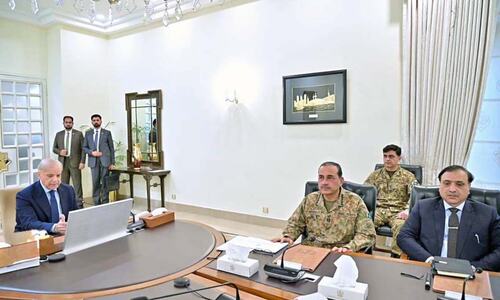
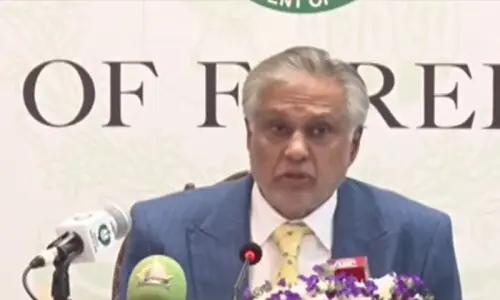
Foreign Minister Khurshid Mahmood Kasuri gave a review of Pakistan’s relations with major powers and groupings of nations at the end of a two-day debate marked by opposition criticism of the government’s performance and perceived subservience to US policies.
“While promoting our partnership we do not compromise on our basic national interests,” he said about the post-9/11 relationship with the United States, and cited instances of Islamabad’s differing with Washington such as the refusal to send troops to Iraq, support to Iran’s right to peaceful nuclear technology and refusal to surrender nuclear scientist Dr A. Q. Khan.
“Pakistan has a balanced foreign policy, it has a nuanced foreign policy,” the foreign minister said but added: “We are not in the business of hitting out heads against the wall.”
He said the US was a strategic ally but “we will not give in on our national interests”.
Mr Kasuri also spoke about growing relationships with China and the Islamic world, movement towards resolution of disputes with India, problem-ridden cooperation with Afghanistan in the fight against terrorism and cooperation with the international groupings such as the European Union, Association of South East Asian Nations and the Shanghai Cooperation Organisation.
He said Pakistan continued its endeavours to build “a strong, stable and sustainable relationship” with the United States. “In working towards that objective, we remain mindful of our core interests and needs. Our positions are conveyed to the US side clearly and candidly. While promoting our partnership, we do not compromise on our basic national interests.”
NO A. Q. KHAN SURRENDER: Mr Kasuri hinted that Pakistan’s refusal to surrender Dr A. Q. Khan for non-Pakistani interrogation might have been a factor in the US refusal to enter into a civilian nuclear cooperation with Pakistan.
The minister said Pakistan could share information on nuclear proliferation activities blamed on Dr Khan but added: “We have certain bottomlines. We have some red lines.”
However, he expressed the hope that Pakistan would get civilian nuclear supplies and said it was engaging on the issue with countries forming the Nuclear Suppliers Group.
“Pakistan believes in active engagement with the international community as is evidenced by the growing number of high-level visits to and from Pakistan,” he said. “Pakistan’s foreign policy remains focused on the promotion of regional and international peace and security, as well as the economic and social development of its people. As a result of Pakistan’s principled and dynamic foreign policy, positive trends are being witnessed in our relations with neighbours, the Islamic world, China, East Asia, including Japan, USA, EU and Russia.”
PAKISTAN BRIDGE BETWEEN REGIONS: Pakistan’s geopolitical location, the foreign minister said, was a positive contributing factor. “We are a land-bridge linking Central Asia, South Asia and West Asia. We offer the shortest access to the sea for the Central Asian States and Western China. We have the potential to become the hub of cooperation for energy, trade and tourism.”
ISLAM-WEST UNDERSTANDING: Mr Kasuri said Pakistan was proud to have taken a lead towards promoting peace and understanding between Islam and the West and was well poised to play the role of acting as a bridge between Islam and the West.
“Internally we want to create a modern, tolerant, democratic Islamic country. Extremists breed strife and hatred, and offer no solutions. Moderation is the glue that keeps societies together and builds a new culture of cooperation and economic development.”
He said Pakistan attached high priority to promotion of relations with its neighbours on the basis of sovereign equality, non-interference in internal affairs of other countries and peaceful resolution of disputes.
PEACE PROCESS: “In recognition of this reality, the foremost and cardinal objective of Pakistan’s leadership has been the peaceful resolution of all outstanding disputes with India, including the core issue of Jammu and Kashmir,” Mr Kasuri said.
He rejected the view of critics that only Pakistan had shown flexibility since the resumption of the dialogue process with India and that New Delhi had not “moved an inch.”
“Yes, we would like India to move faster on resolution of the core issue of Jammu and Kashmir, as well as Siachen, Sir Creek and the water issues,” he said.
“However, it is not factually correct to claim that India has shown no flexibility,” he added and cited instances of an indirect involvement of Kashmiri leaders in the dialogue process, the opening of bus and trade routes and five crossing points across the Line of Control, referral of the Baglihar dam dispute for arbitration and confidence-building measures like the Lahore-Amritsar bus service, the Khokhrapar-Monabao railway link, and an agreement on pre-notification of ballistic missile tests.
“We are discussing an agreement on establishing a demilitarised zone in the Siachen area,” he said. “Let us not forget that as a result of the dialogue process, a ceasefire is holding along the LoC since November 2003.”
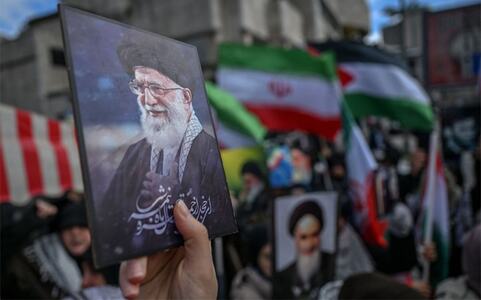
On Iran’s nuclear controversy, Mr Kasuri said Pakistan was against any military intervention in Iran and resorting to violence.
He said Iran had obligations under the nuclear Non- Proliferation Treaty but also had some rights for peaceful use of nuclear technology and added: “The best way out will be an on-site inspection regime.”