European leaders to join Ukraine’s Zelensky in Trump meeting


 0
0


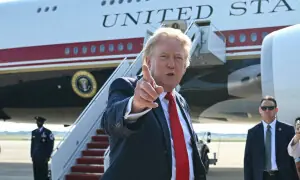
European leaders will join Ukrainian President Volodymyr Zelensky on a Monday visit to Washington to see United States President Donald Trump in a collective bid to find a way to end Moscow’s invasion, with the US offering security guarantees for Kyiv.
The meeting follows a summit in Alaska between Trump and Russian President Vladimir Putin that failed to yield any breakthrough on an immediate ceasefire that the US leader had been pushing for.
Trump, who pivoted afterwards to say he was now seeking a peace deal, on Sunday posted, “Big progress on Russia, stay tuned!” on his Truth Social platform, without elaborating.
Trump’s Russia envoy Steve Witkoff said on Sunday that Trump and Putin had agreed in their summit on “robust security guarantees” for Ukraine.
But Zelensky, on a Brussels visit hosted by European Commission chief Ursula von der Leyen today, rejected the idea of Russia offering his country security guarantees.
“What President Trump said about security guarantees is much more important to me than Putin’s thoughts, because Putin will not give any security guarantees,” he said.
Von der Leyen hailed the US offer to provide security guarantees modelled on but separate from Nato’s collective security arrangement, known as Article 5.
“We welcome President Trump’s willingness to contribute to Article 5 — like security guarantees for Ukraine, and the coalition of the willing, including the European Union, is ready to do its share,” von der Leyen said.
Hopes for ‘productive meeting’
Trump’s pivot to looking for a peace deal, not a ceasefire, aligns with the stance long taken by Putin, and which Ukraine and its European allies have criticised as Putin’s way to buy time with the intent of making battlefield gains.
Zelensky also said he saw “no sign” the Kremlin leader was prepared to meet him and Trump for a three-way summit, as had been floated by the US president.
The leaders heading to Washington on Monday to appear alongside Zelensky call themselves the “coalition of the willing”. They include British Prime Minister Keir Starmer, French President Emmanuel Macron, German Chancellor Friedrich Merz, Nato Secretary-General Mark Rutte and von der Leyen.
Also heading to Washington will be Italian Prime Minister Giorgia Meloni and Finnish President Alexander Stubbs, who get on well with Trump. They all held a video meeting today to prepare their joint position.
Speaking to US broadcaster CNN, Witkoff said: “I’m hopeful that we have a productive meeting on Monday, we get to real consensus, we’re able to come back to the Russians and push this peace deal forward and get it done.”
US Secretary of State Marco Rubio, speaking to NBC on Sunday, warned of “consequences” — including the potential imposition of new sanctions on Russia — if no peace deal is reached on Ukraine.
Territorial ‘concessions’
European leaders have expressed unease from the outset over Trump’s outreach to Putin, who has demanded Ukraine abandon its ambitions to join the EU or Nato. They were excluded from Trump’s summit with Putin.
Witkoff, in his CNN interview, said the United States was prepared to provide “game-changing” security guarantees to Ukraine as part of a process that would involve territorial “concessions”.
According to an official briefed on a call Trump held with Zelensky and European leaders as he flew back from Alaska, the US leader supported a Putin proposal that Russia take full control of two eastern Ukrainian regions in exchange for freezing the frontline in two others.
Putin “de facto demands that Ukraine leave Donbas”, an area consisting of the Donetsk and Lugansk regions in eastern Ukraine, which Russia currently only partly controls, the source said.
In exchange, Russian forces would halt their offensive in the Black Sea port region of Kherson and Zaporizhzhia in southern Ukraine, where the main cities are still under Ukrainian control.
Several months into its full-scale invasion of Ukraine, Russia in September 2022 claimed to have annexed all four Ukrainian regions even though its troops still do not fully control any of them.
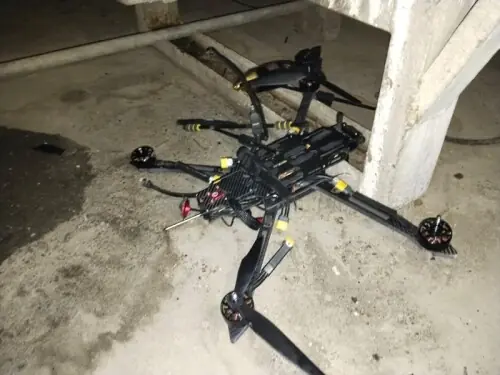
“The Ukrainian president refused to leave Donbas,” the source said. Meanwhile, the conflict in Ukraine rages on, with both Kyiv and Moscow launching attack drones at each other on Sunday.