Tribal fears mount in Himalayas after suspension of Indus Waters Treaty



KEYLONG: Just a few hundred kilometres southeast of India-held Kashmir, a new front over water sharing between Pakistan and India is emerging as New Delhi plans a raft of hydropower plants that threaten the Himalayan ecosystem and the communities it has sustained.
The day after an attack on tourists in Pahalgam, occupied Kashmir, on April 22, India announced it would “put in abeyance” the Indus Waters Treaty, a Cold War-era agreement that divided control of river systems that have an annual flow of roughly 200 billion cubic metres of water.
Although a ceasefire in May brought Pakistan and India back from the brink of war, tensions are rising over another flashpoint: the waters of the Indus river basin.
Brokered by the World Bank in 1960, the treaty has been one of the world’s most enduring water-sharing accords, surviving even full-blown wars between Pakistan and India.
But the suspension has sparked uncertainty over the treaty’s fate and opened the door for India to push energy development along the Himalaya’s rivers.
Experts worry about environmental damage
Within days of saying India would halt its participation in the treaty, Prime Minister Narendra Modi instructed his ministries to fast-track long-stalled infrastructure projects on the western rivers of Chenab, Jhelum and Indus.
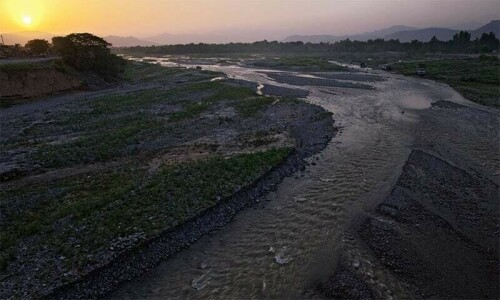
These waterways, control of which was assigned to Pakistan under the 1960 treaty, irrigate Pakistani farms downstream and were largely off-limits for Indian exploitation under the treaty.
At home in India, the prospect of accelerating hydropower projects has also sparked alarm.
The tribal communities in the windswept valleys of Lahaul and Spiti, in the northern Indian state of Himachal Pradesh, fear that damming the rivers could destroy a generations-old way of life.
Building boom
Supporters of the project say the Indus basin can provide India with a source of clean energy and help meet the world’s demand for energy storage. The Himachal Pradesh government announced in January plans to build 22 new hydropower projects with a combined capacity of 828 megawatts across five districts, including Lahaul-Spiti.
The Chenab river, formed by headwaters in Lahaul-Spiti, will see the largest share, with nine hydropower plants totalling 595 MW, according to the plan.
India may also build four reservoirs on tributaries of the Chenab and Jhelum rivers.
Policy experts see India’s strategy as a bid to assert control over the Himalayan waterways.
The suspension of the Indus Waters Treaty allows India to “pursue its development interests on the western rivers”, said Srinivas Chokkakula, president of the Centre for Policy Research in New Delhi.
India now has the “time and means to build infrastructure to accumulate irrevocable leverage”, he said.
For people living in Lahaul and Spiti, such political calculations may pose a threat to their livelihood and traditions. Among them are the Bodh people and the Swangla tribe, whose languages and cultures are tied to Tibet. Isolated for much of the year by snowbound passes, these communities farm the rugged mountain slopes during the warmer months.
Published in Dawn, July 30th, 2025