ISLAMABAD: The Supreme Court has called for a review of pension regulations, which it said were “built on patriarchal assumptions” and perpetuate stereotypes about women.
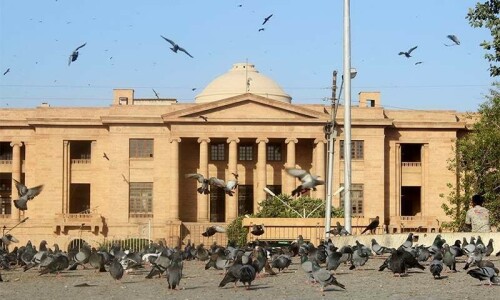
The remarks came from Justice Ayesha A. Malik , who was a member of the two-judge bench alongside Justice Muhammad Ali Mazhar, which decided the Sindh government’s appeal against a Feb 27 decision of the Sindh High Court (SHC) Circuit Bench Larkana.
The case was brought by Sorath Fatima, whose father was an employee of the Road and Transport Department, Sindh.
He died in February 2002 and his pension was awarded to his widow — Ms Fatima’s mother — who also died in December 2012.
Ms Fatima, being an unmarried daughter, sought the pension of her father, which she received until she married.
However, when Ms Fatima’s marriage ended in August 2022, she sought the resumption of her father’s pension on the grounds that being a divorced daughter, she was entitled to it.
The Sindh government denied her application, and Ms Fatima challenged the decision before the SHC, which ruled in her favour. The Sindh government then appealed against the decision in the Supreme Court.
In the 10-page judgment, Justice Malik expressed the concern that a daughter’s entitlment to pension depended entirely on her marital status.
“This dependency model reveals that there is a systematic bias that treats a daughter as a dependent, with her financial dependency shifting from parent to spouse,” the judgment added.
This assumption not only perpetuated “stereotypical mindset about women being dependent members” but also fails to recognise women as individuals or “autonomous individuals” who can be financially independent.
It is also based in the “flawed belief” that unmarried or divorced women are financially dependent, while married women are financially secure, the judgment highlighted.
Justice Malik said pension was an “earned right” passed onto the legal heirs of a deceased government servant.
Justice Malik emphasised the need to revisit pension law and remove marital status as a condition for entitlement.
Published in Dawn, July 30th, 2025