ISLAMABAD: National Commission on the Status of Women (NCSW) initiated a national consultation on Friday to review the draft Islamabad Capital Territory Medico-Legal Regulation Act, 2025.
The proposed legislation sought to overhaul medico-legal services in the capital by introducing a standardised, rights-based, and gender-sensitive framework.
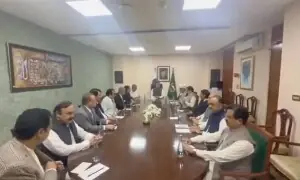
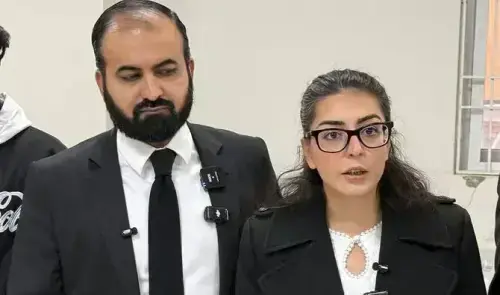
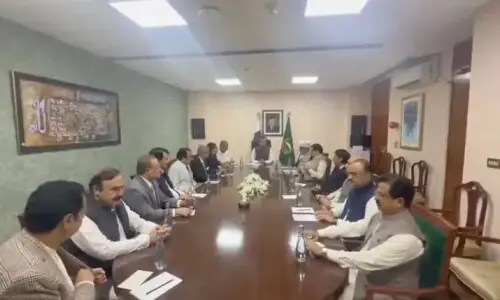
Held in Islamabad, under chairperson NCSW, Ume Laila Azhar, the consultation brought together key stakeholders, including representatives from the Ministry of Human Rights, Ministry of Law and Justice, Ministry of National Health Services, ICT Administration, Pims, Polyclinic, Legal Aid Society, and the Law and Justice Commission of Pakistan. Forensic experts and gender rights advocates also participated.
A statement issued by NCSW said that the Act aimed to ensure that medico-legal practices, particularly in gender-based violence (GBV) cases, were fair, victim-sensitive, and compliant with constitutional and international obligations.
Speaking at the event, Justice Mohsin Akhtar Kayani stressed the urgency of medico-legal reform, calling it essential for restoring justice and dignity to survivors of violence.
Participants addressed a range of complex issues. The Ministry of Human Rights advocated for a balanced approach that ensured protection for both survivors and the accused, expressing concern over rigid timelines for medico-legal report submissions.
PIMS proposed reviewing terminology, suggesting an alternative to the binary “fabricated/non-fabricated” classification and introducing a neutral category to avoid premature judgments. The term “friendly injuries” was also proposed for further discussion.
Jurisdictional alignment was emphasised, with the Ministry of Law recommending a comparative review with existing and proposed legislation in Sindh and Punjab. Digitalisation and outreach were highlighted as enforcement priorities, while the safety of medico-legal officers — particularly in GBV cases — emerged as a recurring concern.
Stakeholders called for the inclusion of the police, judiciary, and community-level health units in the drafting process. A special drafting committee is under consideration.
“We are not just drafting another law,” said NCSW Chairperson Ume Azhar. “We are confronting a broken system where survivors of violence often face further injustice. Let this be a national moment of reckoning.”
The NCSW called on civil society, journalists, legal professionals, and citizens to join the reform process. A second round of consultation was scheduled for early August, focusing on implementation strategies and real case studies.
Published in Dawn, July 26th, 2025