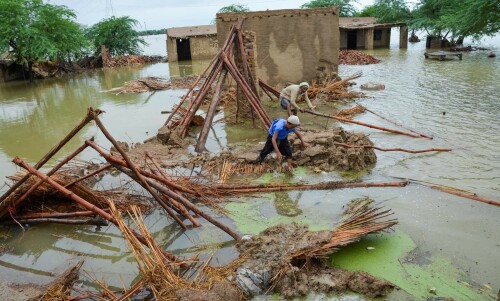
THE utter devastation witnessed across Pakistan this monsoon season is, tragically, neither new nor unexpected.
According to the NDMA, over 200 lives have already been lost since late June, and the country has experienced 80pc more rainfall than average. This is climate change in motion.
The recent River Swat tragedy, where tourists were swept away by a sudden surge of water, and the glacial floods submerging villages in Gilgit-Baltistan show clearly how global warming is reshaping our landscape and our vulnerabilities with it.
The loss is not just human or environmental. It is also economic. Every year, floods and climate-induced disasters wipe out crops, destroy infrastructure, displace communities and derail economic activity. These are costs we can ill afford. Our economic recovery is fragile, and yet, the billions spent on post-disaster relief and reconstruction remain a growing burden.
The fiscal cost of inaction, year after year, is far greater than what preventive infrastructure, climate-smart planning and resilience-building would require. Moreover, climate change should be viewed as a national security concern. Unpredictable monsoons, water scarcity, glacial melt and population displacement risk triggering social unrest over dwindling resources. The security establishment, quick to deploy personnel for rescue efforts, must also recognise that climate resilience is integral to long-term stability — as vital as any defence imperative.
Each disaster also reflects failed governance — at both the centre and the local level. Disaster management remains overly centralised, while municipal bodies and district administrations remain underfunded, disempowered and paralysed by red tape dysfunction. Climate adaptation can only succeed when local institutions have the autonomy, resources and capacity to act decisively. It is also a generational betrayal.
Each year of delay condemns future generations to greater hardship, fewer resources and a degraded environment. The political class must be held accountable not only for current failures but also for endangering the country’s long-term future and compromising its development trajectory.
What Pakistan needs is not just preparedness, but a climate-resilient economic vision that entails sustainability in agriculture, urban planning, water management and energy. The Living Indus Initiative must become more than a talking point. It should anchor a strategy linking glacier dynamics, river systems and urban planning in every province. Pakistan has every right to demand compensation under the Loss and Damage Fund.
But waiting for global payouts while lives are lost is an abdication of responsibility. To ensure accountability, the federal government should publish an annual disaster preparedness scorecard for each province, making transparent who has planned — and who has not. More rains are expected. Will Pakistan continue to pay in lives, livelihoods, and economic stability, or will it finally invest in survival?
Published in Dawn, July 21st, 2025