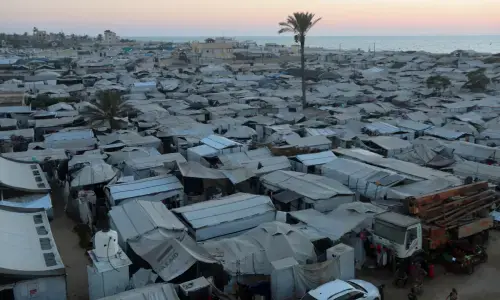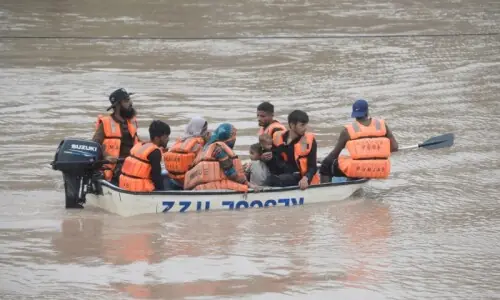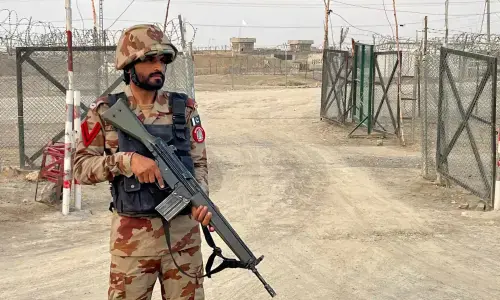


PUNJAB is under water, militant attacks are near daily occurrences, and more than one in three Pakistani children remain out of school. But on one front, this country is hurtling into the 21st century: cryptoisation. Whether this is the trump card (pun intended) that ensures Pakistan’s future economic sovereignty, or another state stumble over ill-intended consequences will depend on implementation.
Within months, Pakistan has gone from being a crypto naysayer, with the State Bank banning all forms of crypto transactions, to setting up the Pakistan Crypto Council; appointing a crypto czar; and initiating regulation and establishing a Virtual Asset Regulatory Authority.
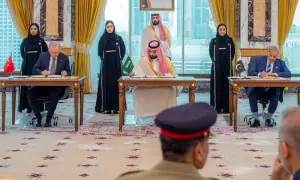
Pakistan’s embrace of cryptoisation is seen as a triumph of crypto diplomacy. Digital asset momentum is spurred by US President Donald Trump’s interest in crypto, and his family’s big bet on World Liberty Financial that is selling Pakistan blockchain technology and crypto advisory under an opaque deal. At a time when Islamabad needs stronger ties with Washington in the context of hostile Pakistan-India ties and looming tariff threats, the plan to pitch Pakistan as a cryptocurrency mining regional hub is a master feat.
But diplomacy is not the only driver of cryptoisation. Pakistan is behind on regulating an instrument that has already become a feature of the economic landscape. Pakistan in 2024 was among the top 10 countries in the world for crypto adoption, ranking ninth according to analysis firm Chainanalysis. Reportedly, around 20 million Pakistanis have invested up to $25 billion in digital assets.
Diplomacy is not the only driver of cryptoisation.
This is not surprising. Cryptocurrencies, and stable coins in particular, are an easy way to store wealth and dollarise savings against a backdrop of high inflation, currency devaluations and foreign exchange controls of the sort Pakistan has witnessed in recent years. Crypto also enables smooth and cheap cross-border money flows. Regulation is urgently needed to bring more visibility to these financial flows, and to reduce the risk that wider adoption of digital assets brings as savings move out of domestic banks and into stable coins, leading to impacts on bank liquidity and domestic lending.
Beyond better regulating (and eventually taxing) an existing crypto market, Pakistan proposes to use surplus energy and a youthful workforce to provide competitive cryptocurrency mining capacity and so attract more foreign investment. Globally, there is a growing positive narrative about crypto adoption in emerging markets as a means to facilitate financial inclusion.
But in this crypto-enabled El Dorado, there be dragons. While crypto adviser Bilal Bin Saqib has repeatedly stressed the need for compliance, Pakistan’s wider economic and security context presents money laundering and terrorism financing risks. For a country that has moved off the Financial Action Task Force grey list as recently as 2022, this should be a top concern.
Despite lip service to anti-money laundering considerations, the prime minister has appointed cryptocurrency exchange Binance’s founder Changpeng Zhao as an adviser to the crypto council, despite his four-month sentence for failing to meet US anti-money laundering regulations. Unsettlingly, an aggressive crypto adopter is the TTP, which, it has been reported, has openly requested donations via Binance accounts. Without adequate knowhow and regulatory enforcement capacity, Pakistan should tread carefully into the crypto realm to avoid black listing risks.
Pakistan should also not oversell the fallacy of financial inclusion. Crypto take- up is likely to be among the richest, who have spare capital to invest in dollar-pegged stable coins as a form of offshore financial security, not among the most under-banked — low-income women who struggle to open bank accounts. Unless a significant welfare and inclusion strategy is adopted as part of the current cryptomania, this will be another form of elite economic capture.
And finally, there’s the climate consideration, which should be a top policymaking priority in our extremely climate vulnerable country. Crypto mining has a major carbon footprint; each bitcoin transaction generates the same carbon emissions as driving a fuel-powered car around 1,600-2,600 kilometres, and uses as much water as it takes to fill a swimming pool. There is incoherence in Pakistani policymaking that seeks to simultaneously attract international climate finance and position the country as a crypto mining hub. The silence on sustaining a crypto mining project in a water-scarce country is particularly alarming.
Cryptoisation benefits can only be seized if we’re willing to contextualise digital asset policies with our numerous other challenges — let’s learn this much from past mistakes.
The writer is a political and integrity risk analyst.
X: @humayusuf
Published in Dawn, July 21st, 2025