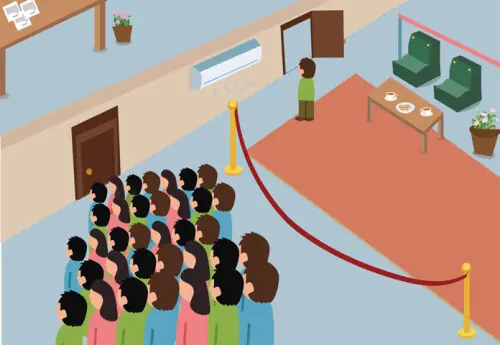
All through our lives, we make promises — to ourselves and to others. We promise to start exercising, to attend a social event, to submit a report or to buy our child a toy. A promise is a general term for a commitment. Some we fulfil, some we cannot.
The consequences of not keeping a promise are usually simple emotions, such as personal embarrassment, losing another’s trust, or perhaps inspiring poetry, as Dagh Dehlvi wrote: “Ghazab kya, tere wade pe aitbaar kya [It was a disastrous mistake to put faith in your promises].”
Vows are a step up in making a commitment — a more solemn promise, a sacred trust — as demonstrated by wedding vows, religious vows or even vows of revenge. A broken vow may lead to remorse, guilt or social embarrassment.
Oaths, on the other hand, are public declarations that carry great weight. They invoke a higher power to hold the person accountable for a solemn promise made before witnesses. Oaths are taken in professions where public trust and ethical conduct are paramount, such as law, medicine, the military, the police or by those holding a public office. Oaths taken are a call to serviceto others. There are no oaths administered to “serve ourselves.”
Age-old forms of commitment are indicators of how society views personal ethics, public trust and spiritual consequences
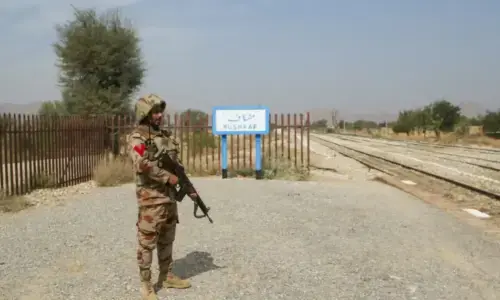
Public office and military oaths across the world are similar. Public servants in Pakistan swear to discharge their duties honestly, in accordance with the Constitution and “without fear or favour, affection or ill-will”, not allowing personal interest to influence decisions. Uniquely in Pakistan, the military oath, along with the customary upholding of the Constitution, defined as the will of the people, also swears to not engage in any political activities whatsoever.
The failure of public office holders to do so could result in impeachment, removal from position, fines or even prison time, while military personnel face dishonourable discharge, imprisonment or even a charge of treason, punishable by death.
In reality, despite an overwhelming number of cases where oaths are not upheld, few are held accountable. The 19th century Utilitarian philosopher Jeremy Bentham, in his book Swear Not at All, held oaths to be useless, since no one is ever punished for violating them, thus creating an opportunity for perjury and moral corruption. The Quakers objected to oaths in courts on the grounds that truth must be told at all times, not only under oath.
The consequence of violating an oath in Islam does not carry a legal punishment but requires a moral atonement, not dissimilar to the Catholic Church, which accepts personal repentance as sufficient. Islam identifies three kinds of oaths. Qasam Laghu is an oath made without knowledge of the true facts, which is not considered a sin. Qasam Mun’aqidah is a promise to do something in the future that one fails to do. Expiation for failing to uphold this oath requires the freeing of a slave, or the feeding of 10 needy people or clothing them. In case the person has no means to do this, then fasting for three days is required. However, an intentionally false oath, Qasam Ghams [literally meaning ‘that which drowns’], is a disaster for one’s present and future life, for which one is answerable on the Day of Judgement. No expiation is possible. However, sincere repentance, Taubah, and seeking forgiveness, Istighfar, are recommended. The sin lies in the intention not the act, being “accountable for what your hearts have designed (2:225).”
The Quran itself is full of poetic oaths taken on tangible aspects of creation rather than abstract ideas — swearing by galloping horses striking sparks of fire with their hoofs, the night when it is stillest, the dependability of daybreak, the rotation of the earth, the winds carrying rainclouds, the fig and the olive, every parent and child, by the witness and what is witnessed.
Despite Bentham’s concerns, psychologists have found that making a promise to be honest, especially in the form of a signed document, encourages people to behave in an honest way, even when there’s a temptation to lie. However, group oath-takers easily succumb to peer pressure. Yet, they find people are willing to forgive a broken oath if there is a genuine apology and a candid explanation for the failure to fulfil a promise.
Community developer Angela Blanchard believes people holding public office “are asked to be like mothers. To be a womb. To hold and protect, to nourish and serve.” Society rests on trust and the expectation that people will do what they say they will do. Phrases such as “You’re only as good as your word”, similar to “zaban dena [to give one’s word]”, point to this expectation of trust. Society itself judges those who do not keep their promises.
Durriya Kazi is a Karachi-based artist.
She may be reached at durriyakazi1918@gmail.com
Published in Dawn, EOS, July 20th, 2025