GARDENING: THE ZINNIA CHRONICLES
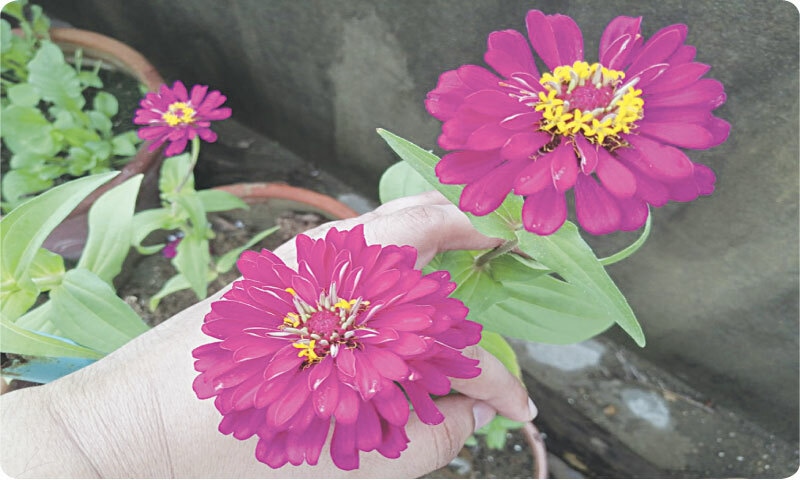


Bright, cheerful and easy to grow, zinnias are a favourite among gardeners for their long-lasting blooms and resilience. These sun-loving flowers flourish in well-drained soil and hot weather, making them ideal for summer gardens.
Zinnia seeds are usually sown in pots and seedling trays during the month of February in cities with a climate similar to Karachi’s, ranging between 20 to 25 degrees Celsius. The germination of seeds, in ideal conditions, takes about three to seven days from the day of sowing.
Once the seeds germinate, the plastic cover of the pot or the seedling tray should be removed. This cover is initially placed on the container to retain moisture. The sunlight exposure hours of the container are to be gradually increased with the growth of the seedling. As the cover is removed and the seedling is exposed to increasingly longer sunlight hours, the water requirement also increases. Now, the container has to be watered daily to ensure the soil remains moist throughout, but does not turn soggy.
The first two leaves that appear on the seedlings are cotyledons, which are visibly rounded in shape. The distinct true leaves begin to appear after one week to ten days of germination. In case the seedlings have been grown in a seedling tray, they should be spooned out, segregated and transplanted individually, in a dedicated five-inch container. The same segregation and transplantation technique applies to seeds grown in a seedling pot.
From seed to bloom, zinnias require simple steps but vigilant care, not only against pests and predators but also some flowers that fade…
There is one technique used by flower-growers in the earlier phases of the zinnia plant’s life cycle, which helps to make the plant bushy. After six to seven true leaves grow on the seedling, the top part of the seedling is snipped or pinched out. In this way, the seedling will look better, as more branches and, resultantly, more flowers will begin growing on the plant.
At the same time, the snipping also reduces the possibility of the seedling turning weak, lanky or leggy. This technique can be applied to all zinnia plants barring the dwarf variety. Since the dwarf variety is already small, there are seldom any chances of the seedling of the dwarf zinnia turning leggy.
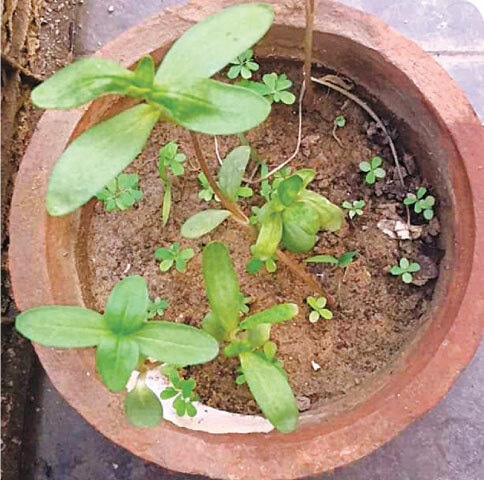
At this phase, a mild fertiliser combination can be applied to the plant. However, it is preferable to have more nitrogen content. At this stage, the focus is to increase the branches and foliage of the zinnia plant. The nitrogen content of the fertiliser helps to increase the leaves and makes the plant stronger. At the same time, the plant also requires improved air circulation between the leaves, to diminish chances of fungal infections, especially related to the leaves, branches and stem of the zinnia plant.
During this stage, the seedlings are especially vulnerable to attacks by pests and birds, as both fancy the plant’s new, young leaves. Covering seedling pots with a green net goes a long way in saving the newly developing plants from preying birds overhead. Pests such as aphids, mealy bugs and spider mites may also attack seedlings and saplings of the zinnia plant. Any organic pesticide can be sprayed on the plant every 10 to 15 days to minimise chances of pest attacks.
A big challenge is when the growing area is inhabited by slugs. Slugs absolutely love to devour the zinnia plant. It is crucial to clear the growing area of any probable slugs before growing zinnia in the vicinity. Some gardeners even put in copper coins or wound copper wire around the plant stem due to the belief among gardeners that copper repels slugs.

Sometimes, the buds and flowers begin to appear early, during the late seedling and early sapling stages of the plant. Once the flower blooms and withers, it is important to remove the dried flower soon — a process known as deadheading. If deadheading is not applied, the dried flower would continue to sap the plant’s energy and hamper its growth. However, in the maturity phase of the zinnia plant, the dried flower can be left on the plant to complete its cycle and produce seeds for the next season.
Please send your queries and emails to doctree101@hotmail.com. The writer is a physician and a host for the YouTube channel ‘DocTree Gardening’ promoting organic kitchen gardening
Published in Dawn, EOS, July 20th, 2025